Feel Lifted
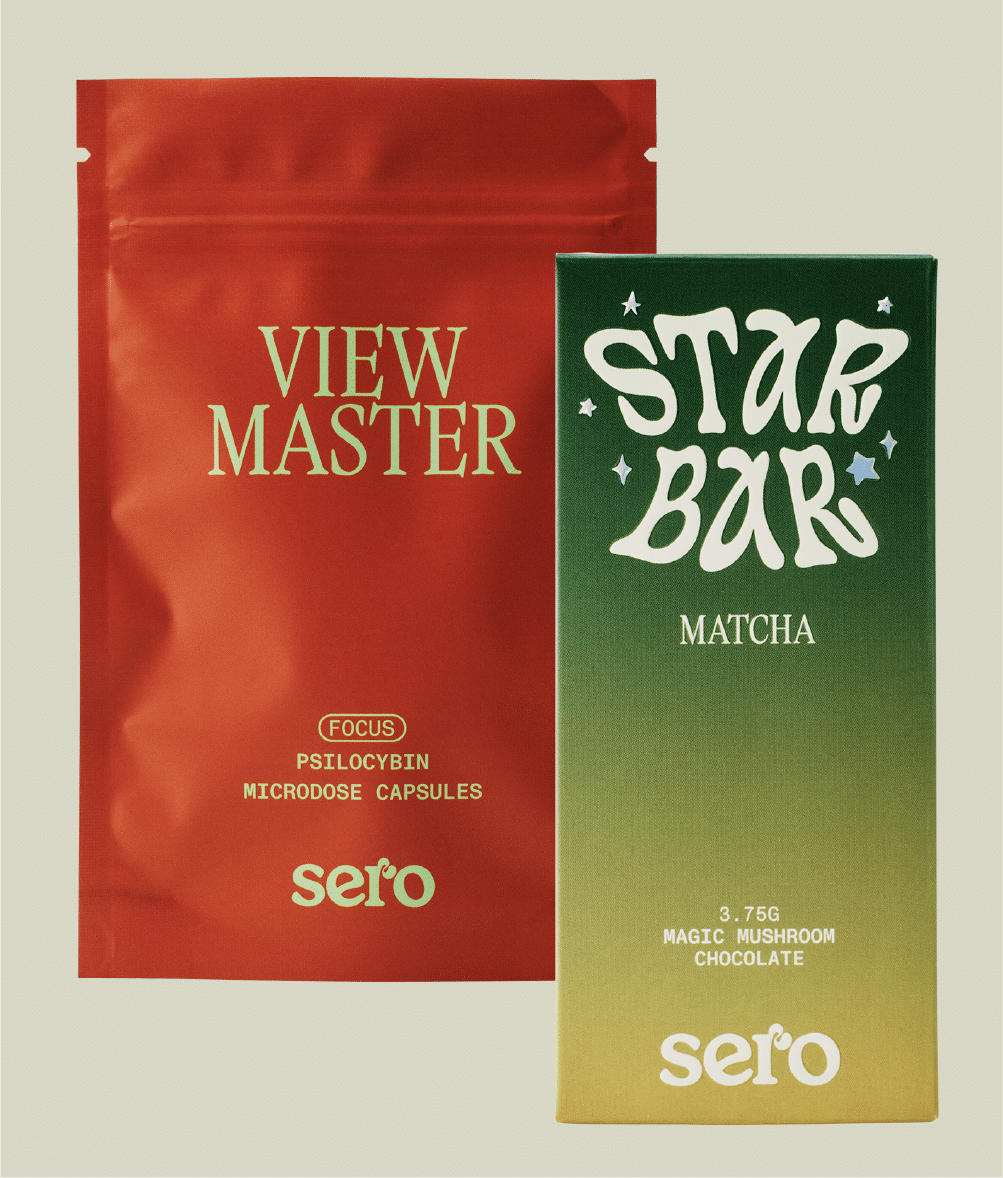
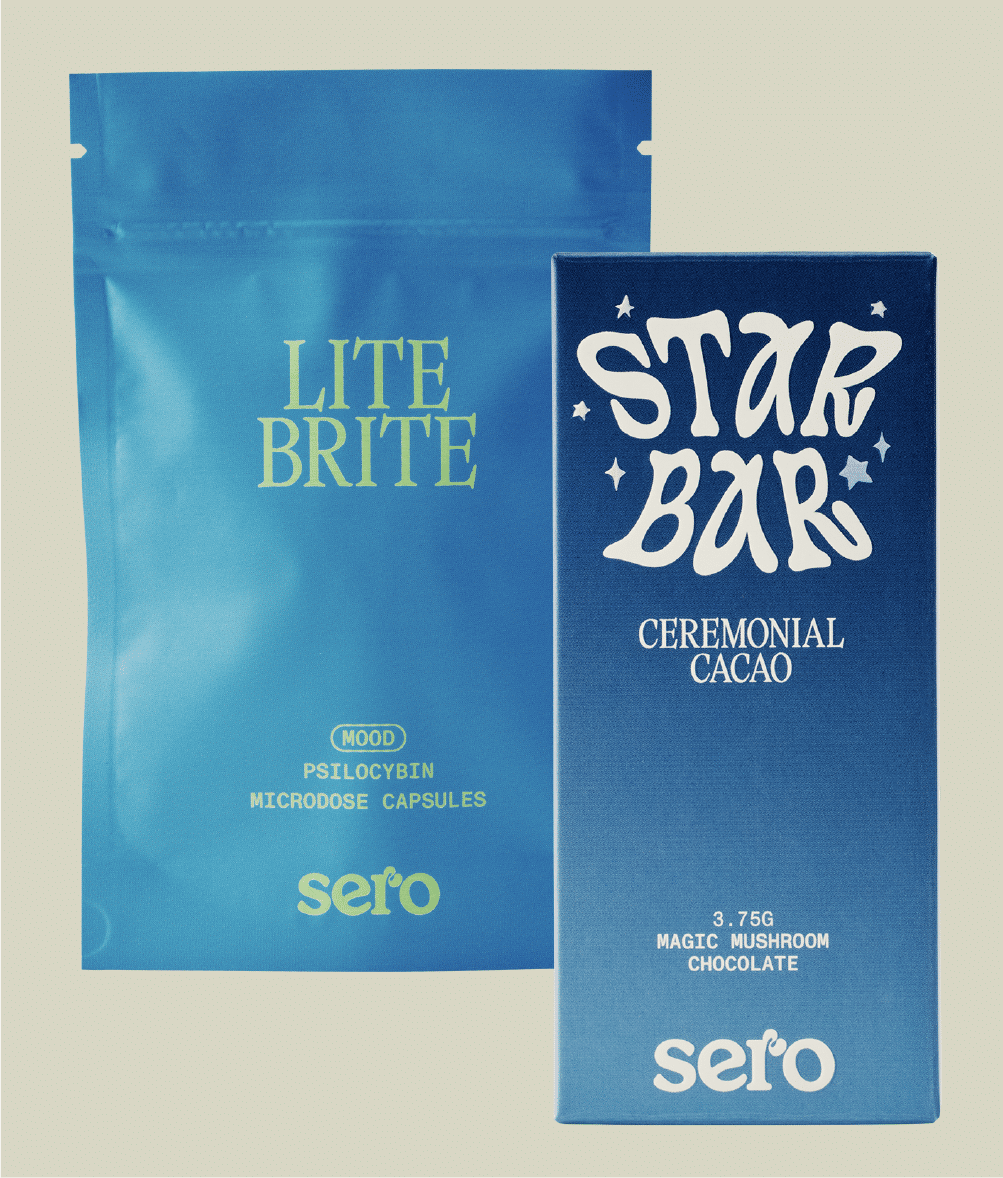
Looking to microdose and macrodose to improve your mood? Get started with this bundle. .

When people in Canada search for stress relief with mushrooms, they usually mean one of two things: everyday functional mushrooms such as reishi and lion’s mane, or psilocybin mushrooms taken in small, measured amounts. The two are different products with different effects and different rules. The best results start with knowing which one you are choosing, what it is meant to do, how to use it with care, and where to find a format that suits your routine. At Sero, we make capsules, chocolates and teas for people who want a calmer, clearer day, and this guide explains how to approach each.
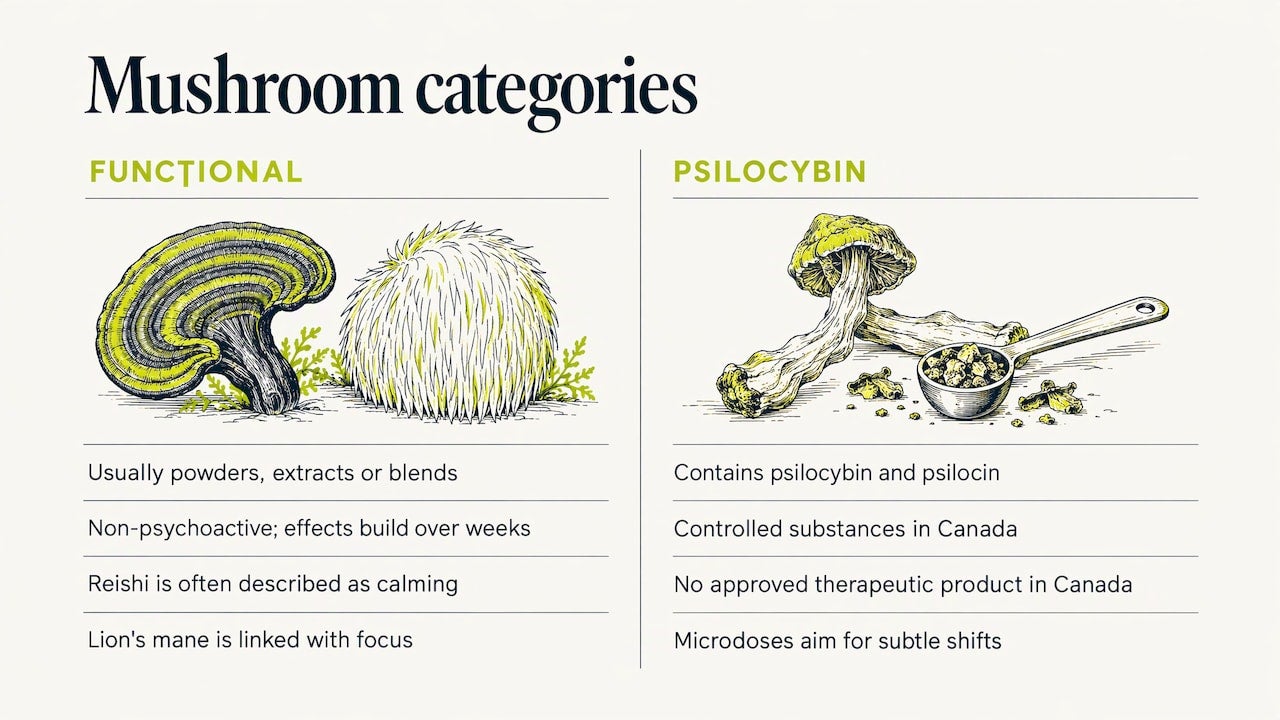
Search results for this topic mix two very different categories, and it helps to separate them early.
Functional mushrooms are culinary or medicinal species, usually taken as powders, extracts or blends. Reishi is the one most often described as calming. Lion’s mane is the one most often linked with focus. Cordyceps and chaga appear in energy and “adaptogen” blends. Adaptogen is the wellness term for a plant or fungus taken to help the body cope with everyday strain. These are not psychoactive. You will not feel altered. The aim is a gradual, background effect over weeks. Our guide to functional mushrooms and what they do goes deeper on each species.
Psilocybin mushrooms, commonly called magic mushrooms, contain psilocybin and psilocin. In Canada these compounds are controlled substances, and Health Canada notes that no therapeutic product containing psilocybin is approved here. Microdosing means taking a very small amount, well below the level that produces a strong psychedelic experience, with the goal of subtle shifts in mood, focus and emotional balance.
Those are the two paths, and a few of our products blend ideas from both: curated blends with functional ingredients built around goals such as calm, focus and creativity.
The research on functional mushrooms is young, but it is moving, and lion’s mane is the most studied for mood and stress.
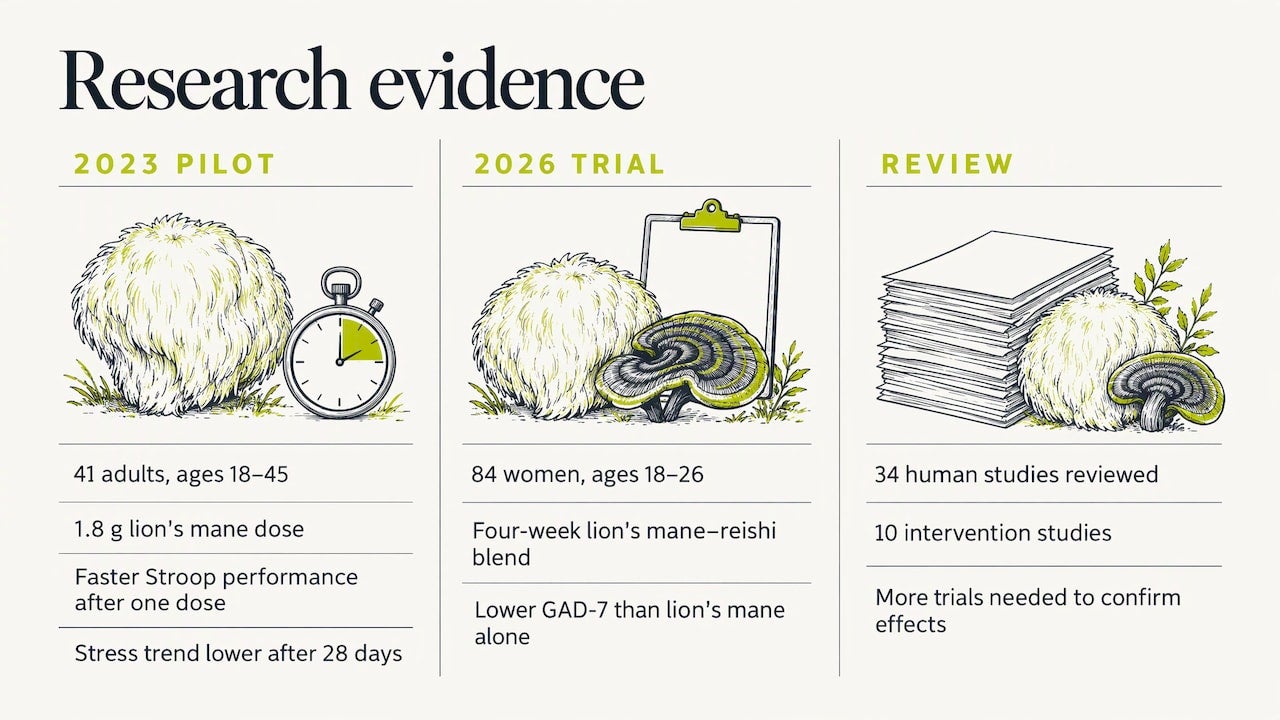
In a 2023 randomized, double-blind, placebo-controlled pilot, 41 healthy adults aged 18 to 45 took 1.8 g of lion’s mane. The researchers found quicker performance on a Stroop task after a single dose (a standard test of attention and mental speed), and a trend toward lower subjective stress after 28 days of use. The sample was small, so the authors called for larger studies, which is the normal next step for early work like this.
A 2026 four-week randomized trial in 84 women aged 18 to 26 looked at a lion’s mane and reishi blend. On the main anxiety measure (the GAD-7 questionnaire), the blend group scored lower than the group taking lion’s mane alone. That is interesting for anyone drawn to blends, because it suggests combining species is a direction worth exploring.
A broader review of mushrooms and mood identified 34 human studies, including 10 intervention studies, and concluded that more human trials are needed to confirm the effects. So the honest summary is this: the early signals are encouraging, the field is growing, and the people who report benefits tend to be those who use mushrooms consistently for several weeks rather than expecting an overnight change.
Functional mushrooms are a daily habit, not a rescue remedy. If you take them, give them a few weeks, take them at the same time each day, and notice how you feel about sleep, irritability and concentration. A short note on your phone each evening is enough to see a pattern.
People who microdose psilocybin do so to support mood, focus, creativity and emotional balance. Those are the goals we hear about from the more than 5,000 customer reviews on our products, and they are why we build our offering around controlled, measured amounts rather than guesswork.
The idea behind a microdose is that the amount is small enough that you can go about a normal day: work, errands, a creative session, a walk. Because mushroom potency varies substantially from one specimen to another, according to Health Canada, consistency matters. A product made in controlled doses gives you a predictable starting point, which is the reason our capsules exist. Loose, dried mushrooms of unknown strength make it hard to know what you are taking from one day to the next.
Two practical habits help most people:
Our guide to microdosing mushrooms in Canada lays out the range of formats.
The right format is the one you will use calmly and consistently. Here is how our three product lines fit different days.
| Format | Best suited to | How it fits a routine |
|---|---|---|
| Microdosing capsules | A steady, repeatable schedule | Measured, easy to take with water, discreet at work or when travelling |
| Magic mushroom chocolate | People who like a small daily ritual | A square of chocolate is familiar, pleasant and easy to portion |
| Magic mushroom tea | A slower, calmer wind-down | Brewing a cup is itself a pause, which suits stressful afternoons and evenings |
Much of the stress relief people describe has to do with stopping. A mug of tea asks you to put your phone down, wait a few minutes and sip. That small ritual is a recognized way many people shift out of a rushed mindset, and it pairs naturally with a calm evening routine. If tea is your preferred way to unwind, our magic mushroom tea range is made for exactly that moment.
If your stress comes from a packed schedule, a capsule removes decisions. There is nothing to brew, weigh or measure, so the habit takes seconds and fits around meetings, commutes and family time.
If you are a writer, designer, musician or maker looking for a gentle lift in inspiration, chocolate offers a pleasant, portioned format you can have before you sit down to work.
Wellness products still deserve careful use, and the facts below come from Canadian health sources.
Effects. Health Canada says psilocybin effects may begin within 15 to 45 minutes and usually last four to six hours. It lists possible effects including anxiety, panic, confusion, nausea, muscle weakness, and increased heart rate and blood pressure. Starting low is how you keep your experience comfortable.
Combinations. Health Canada notes that combining magic mushrooms with cannabis, amphetamines or alcohol raises the risk of serious side effects. Keep a mushroom day separate from those substances.
Who should avoid psilocybin. A Canadian clinical practice review states that a history of schizophrenia, psychosis, bipolar disorder or borderline personality disorder is generally considered a contraindication, as are pregnancy and breastfeeding. It also identifies short-term increases in heart rate and blood pressure, and treats serious or uncontrolled cardiovascular conditions as a relative contraindication. If any of that applies to you, or if you take prescription medication, speak with your doctor or pharmacist before using psilocybin.
Long-term use. Health Canada notes that the long-term effects of repeated use have not been evaluated. That is a good reason to use small amounts, take regular breaks, and keep paying attention to how you feel.
Setting. Take your dose on a day when you are not driving, operating equipment or handling anything that needs sharp reaction time, until you know how you respond.
Psilocybin and psilocin are controlled substances in Canada, and Health Canada says no psilocybin therapeutic product is approved here. It describes the evidence as limited and points to clinical trials as the route for research. Policy is a live conversation, with lawmakers and advocates debating reform. If you want to follow it, we have written about how lawmakers view magic mushrooms and mental health and about Thomas’ Bill. For the practical side of ordering, see our guide on how to buy magic mushrooms online in Canada and our page on delivery across Canada.
Mushrooms work best as one piece of a routine, not as the entire plan. Here is a simple structure that many people find sustainable.
Creatives can add a fifth habit: schedule a block of focused work soon after taking a dose, so you can see how your mood and ideas respond.
Some readers ask about picking their own. Wild mushroom identification is difficult, potency varies widely and look-alike species exist, which is why we explain it in detail in our guides on foraging magic mushrooms in Canada and on wild magic mushroom species and photos. For a measured, consistent experience, products made in controlled doses are the more predictable choice.
We sell sustainably harvested, chemical-free mushroom products, including microdosing capsules, psilocybin chocolates, teas and curated blends with functional ingredients. We pair them with educational resources and guides for responsible use, and we source ethically, with respect for indigenous traditions and a focus on building an inclusive community. Customers come to us from many walks of life: people looking for mental clarity, emotional balance, inspiration for creative work, or a calmer way to approach their day.
If you want a steady routine, start with our microdosing capsules. If you prefer a ritual, look at our magic mushroom tea or magic mushroom chocolate.

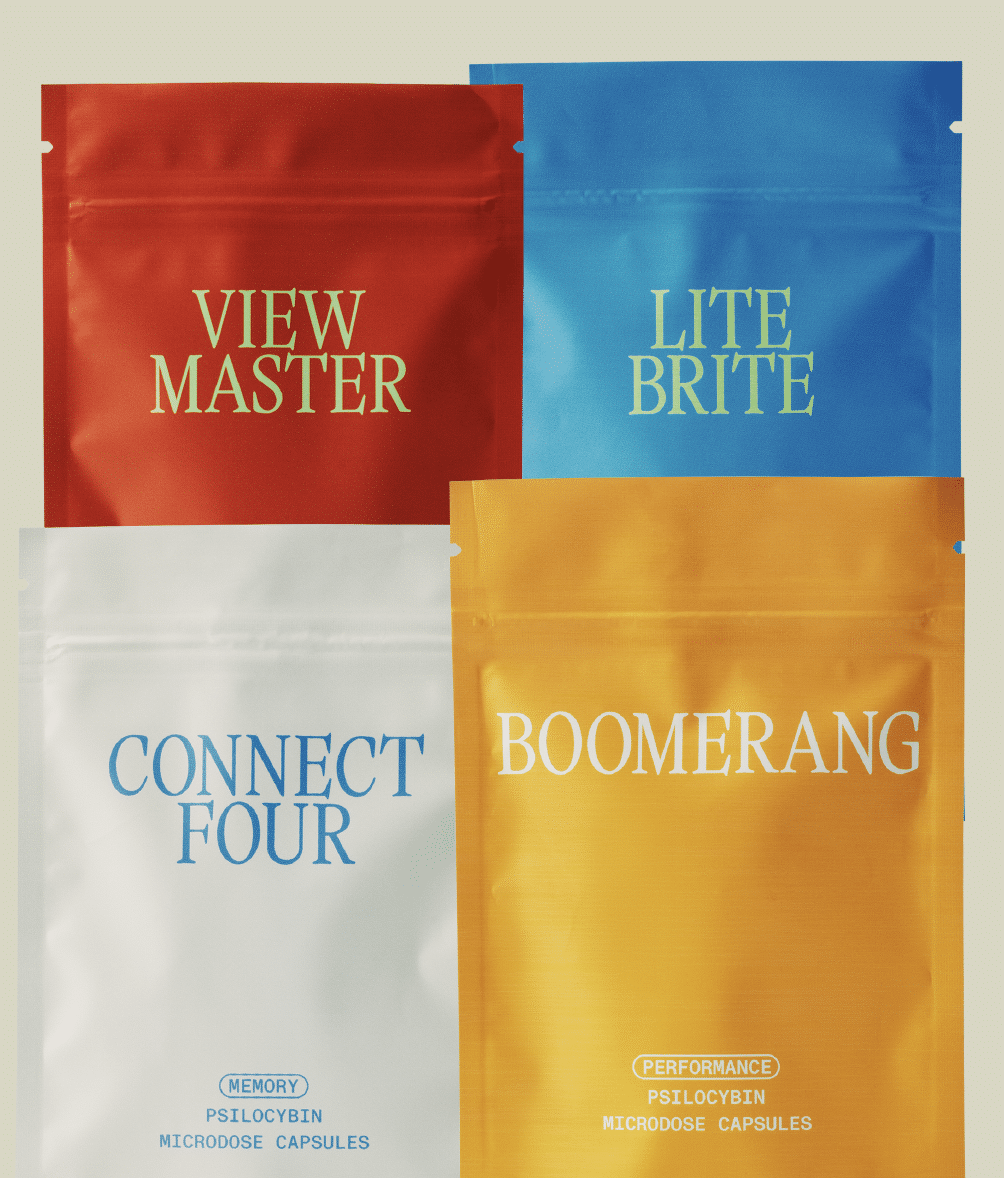
You can also browse the blends built around specific goals, such as Lite Brite, Boomerang and Connect Four.
It depends on the goal. Reishi is the functional mushroom most often chosen for calm, and lion’s mane for focus. Psilocybin mushrooms in small, measured amounts are chosen by people who want mood and emotional balance support. Many people choose a blend that combines functional ingredients with a measured dose.
Functional mushrooms are usually taken daily for several weeks, and the lion’s mane pilot looked at changes over 28 days. With psilocybin, Health Canada says effects may begin within 15 to 45 minutes and usually last four to six hours, so a log of how you feel that day is the simplest way to learn your response.
Many people like tea because brewing and sipping it is a pause in itself, which suits an afternoon or evening wind-down. Our magic mushroom tea is made for that moment, and it fits well alongside a regular evening routine.
Health Canada says combining magic mushrooms with cannabis, amphetamines or alcohol raises the risk of serious side effects. Keep your mushroom days separate from those substances.
A Canadian clinical review lists histories of schizophrenia, psychosis, bipolar disorder or borderline personality disorder, as well as pregnancy and breastfeeding, as contraindications. Serious or uncontrolled heart conditions are a relative contraindication. Talk to your doctor if any of this applies to you or if you take prescription medication.
This article is for educational and informational purposes only and does not constitute medical advice. Psilocybin is a controlled substance in Canada, legal access is limited. Always consult a qualified healthcare professional before considering microdosing, particularly if you have an existing medical condition or take medication.