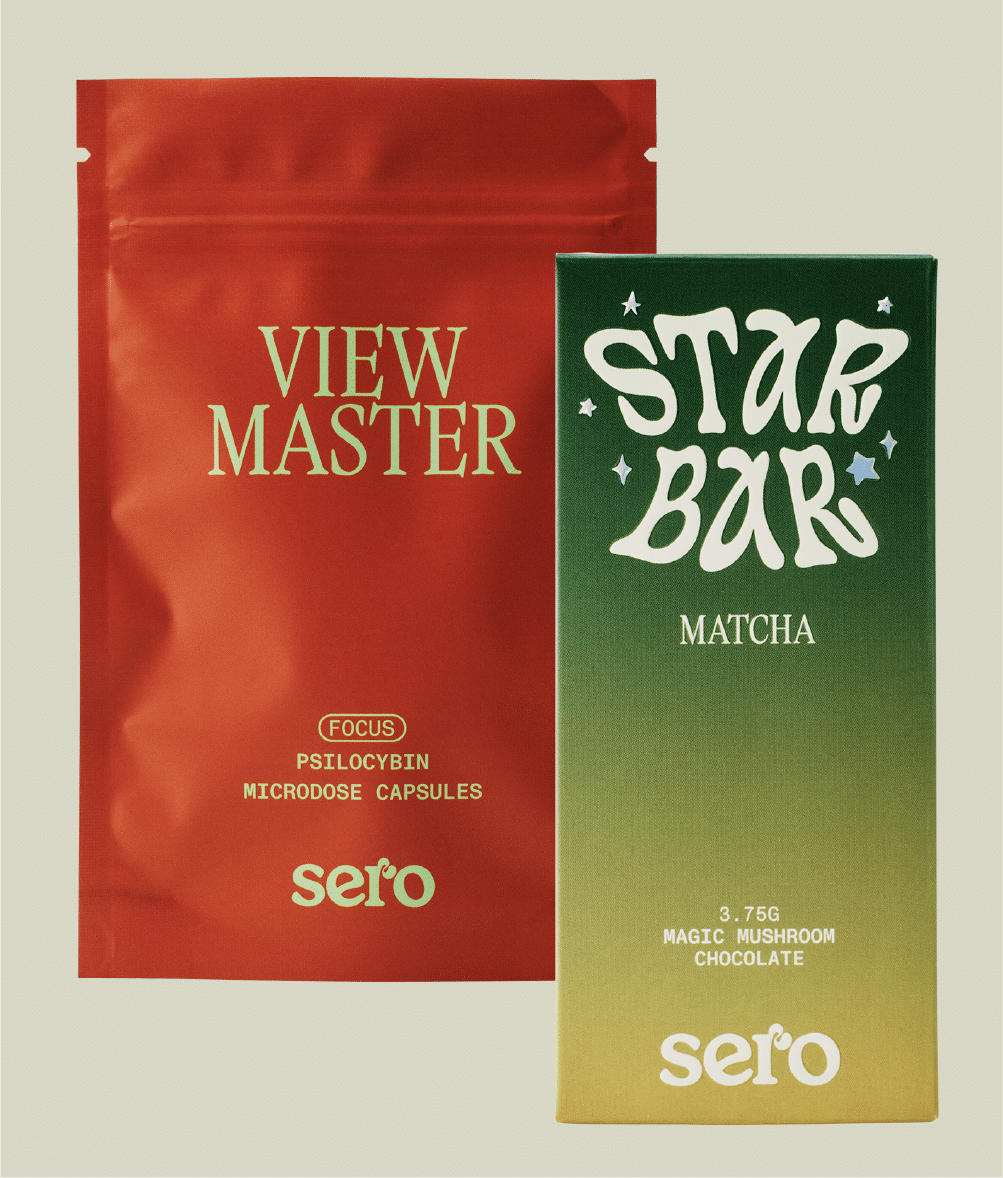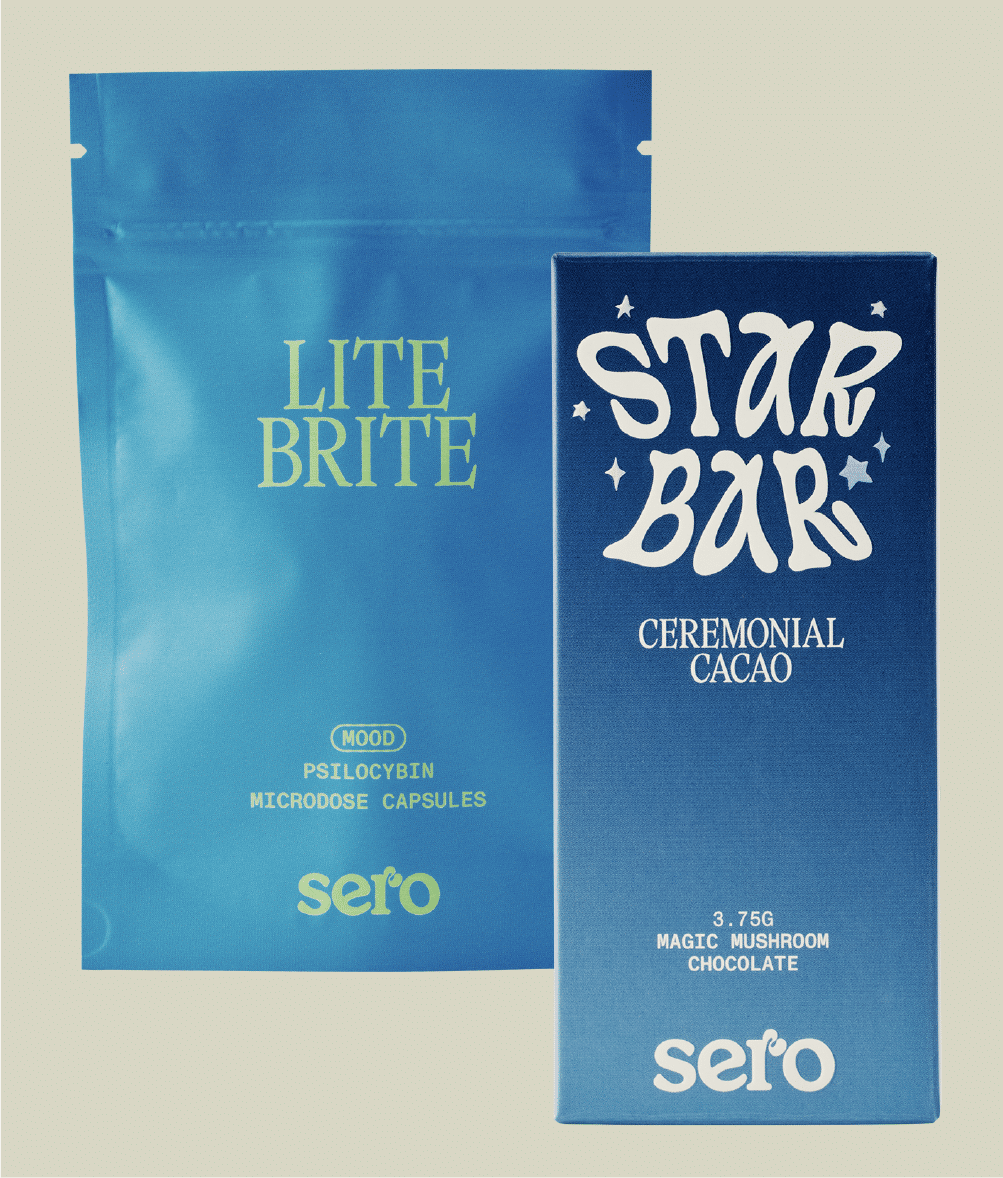
Feel Lifted
Looking to microdose and macrodose to improve your mood? Get started with this bundle. .

Most people who microdose at work are not chasing an experience. They want a clearer head on a Tuesday afternoon, steadier moods in meetings and room to think creatively. What separates a considered routine from a careless one is structure: a spacing plan, a written record of how you feel, and a clear view of your job’s demands and your employer’s rules. This guide covers all three, and shows how Sero’s microdosing capsules, chocolates and teas fit into that routine.
Microdosing is taking a small fraction of a full dose. In Canadian workplace guidance, BLG describes it as roughly 100 mg of mushroom, about one tenth of a normal dose, taken every few days. The intent is to stay below the level that produces obvious psychoactive effects, so you can still answer email, run a meeting or draft a report.
The phrase “at work” covers three different habits:
They are not the same, and a lot of the frustration people report comes from mixing them up. The first is the most visible to colleagues and the most demanding of your own judgment. The second protects your working hours. The third is the easiest to track.
The motives are consistent across surveys. A 2019 survey of 1,116 microdosers found performance enhancement was the leading reason at 36.6%, and 47.6% said they microdosed to go to work.
The goals sort into four groups:
In a six-week study of 98 microdosers, participants reported increases across psychological functions on dosing days. Focus and productivity were still slightly elevated two days later, and most measures had returned to baseline by the next day. That pattern is why spacing matters more than the dose itself. If the effect is mostly on the dosing day, you decide which days those are and plan the rest around them.
Sero’s products are designed around these goals. Its blends pair psilocybin with functional ingredients, aimed at mood, focus, creativity and emotional balance.
The format changes how your day runs, so choose it with your schedule in mind.
Capsules suit people who want a repeatable, measured routine. You take one with water and don’t think about it again. They are the easiest format to log, and they are discreet at a desk. Sero’s microdosing capsules are its core line.
Chocolate suits people who like a ritual and prefer a gentler, slower start to the morning. Magic mushroom chocolate fits a pre-work breakfast or a weekend creative session.
Tea suits people who want to slow down. Magic mushroom tea works well for a calm planning morning or reflective work such as journaling, sketching or strategy.

Whichever you choose, stay with one format and one amount for a few weeks. Changing several things at once makes it impossible to tell what helped.
The most common mistake is improvising. A plan takes ten minutes and answers the questions that matter on the morning itself.
Microdosing is built on spacing, not daily use. The effects in the six-week study were mostly confined to dosing days, so a gap of a couple of days between doses is the usual pattern. Sero’s microdosing schedule guide explains how to space doses in Canada, including common patterns that keep most days dose-free.
Look at your week. A day of deep solo work, drafting, design or planning is a better fit than a day full of high-stakes presentations or travel. Put your first doses on a lighter day. Choose a day you can be flexible with, so you can see how you respond before you attach it to anything important.
Health Canada-aligned workplace guidance puts psilocybin’s onset at 15 to 45 minutes and its effects at four to six hours at full doses, according to BLG’s summary. A microdose is much smaller, but the timing logic holds: take it at the start of the day, and don’t add a second dose when you feel little. Effects can also vary between mushrooms of the same species, which is why Sero’s consistent, measured formats and its guidance on responsible use matter for a routine you repeat.
Take your dose with food or after breakfast, drink water and keep the usual sleep and caffeine pattern. Nausea is among the common side effects the Canadian Public Health Association’s forum report lists, alongside transient anxiety and headache. A steady routine makes it easier to spot what is the dose and what is just a bad night’s sleep.
Skip a dose day when you are unwell, short of sleep, anxious about something specific or facing a task that needs your full, unaltered attention. Write these rules down once. It is far easier to follow a rule you wrote last week than to argue yourself out of dosing on the morning.
Anyone who has microdosed knows how easy it is to credit a good day to the dose. A record cuts through that. Keep it short enough to do in under a minute:
| What to log | Why it matters |
|---|---|
| Dose day or non-dose day | Lets you compare the two |
| Amount and format | Keeps the variable steady |
| Sleep the night before | The biggest confounder |
| Focus, mood and energy, 1 to 5 | Shows patterns over weeks |
| One work task you did well or badly | Ties the log to your actual job |
| Any side effects | Helps you adjust or pause |
After three to four weeks, compare dose days with the days around them. If your focus score on dose days sits one point above the others, or your mood is steadier on the day after, you have something concrete. If you can’t see a difference, you have learned that too, and you can adjust your plan.
Sero’s Microdose + Mood Tracker Magnet is made for this kind of record, so the log sits where you see it every morning.
This part is plain fact about the setting you work in, and it shapes your routine as much as the dose does.
Health Canada states that production, sale and possession of magic mushrooms are illegal under the Controlled Drugs and Substances Act unless authorized by Health Canada. Legal access runs through clinical trials, the Special Access Program and individual exemptions. Employers read the same rules, so their policies are written accordingly. BLG recommends that employers clearly prohibit possession, use and sale of psilocybin at work, including bringing products onto the premises without intending to consume them.
For you, that means a few practical habits:
If you work in a federally regulated sector, Employment and Social Development Canada says the Canada Labour Code has no specific drug-use provision. Employers must instead run Hazard Prevention Programs, which can include impairment policies. Drug testing in safety-sensitive positions is generally permissible in specific situations, assessed case by case, and the Canadian Human Rights Commission recommends observation and supervision over testing wherever possible.
The Canadian Human Rights Commission’s guide on impaired work explains that substance dependence is treated as a disability, which triggers an employer’s duty to accommodate up to undue hardship. Options include reassignment to a non-safety-sensitive role, schedule changes and leave for treatment. If your work, mood or attendance is slipping, talk to your doctor and your HR contact early. Employers are expected to ask questions when performance or behaviour changes, so it is better that the conversation starts with you.
Health Canada lists anxiety, panic attacks, confusion, fear or paranoia, increased heart rate and blood pressure, nausea and muscle twitching among psilocybin’s effects. It also notes that impaired judgment may lead to risk-taking, and that no studies have evaluated the long-term effects of repeated use.
That list is the reason your job matters. BLG’s guidance says psilocybin is not readily compatible with high-risk work involving precision tools, heights or driving, and that it could affect performance even when taken outside work hours. If your day includes operating machinery, driving for work, working at height or caring for others in a critical setting, don’t dose on or just before those shifts.
A useful self-check before any work day:
If you have a history of anxiety disorders, heart conditions or a family history of psychosis, speak to your doctor before starting.
People who describe good experiences at work rarely credit the capsule alone. They pair dose days with habits that make the most of a calm, focused morning:
If your main goal is emotional balance rather than output, Sero’s guide to microdosing for anxiety covers that angle in more depth. If you are curious about how attention differs between people, there is also a piece on ADHD, ADD and microdosing.
A workplace routine depends on consistency, and consistency depends on knowing what you are taking. Sero offers microdosing capsules, chocolates and teas, made from sustainably harvested, chemical-free mushrooms, with educational guides on responsible use. The functional blends are designed for different goals, from focus to mood to creativity, so you can match the product to the kind of work day you have planned.
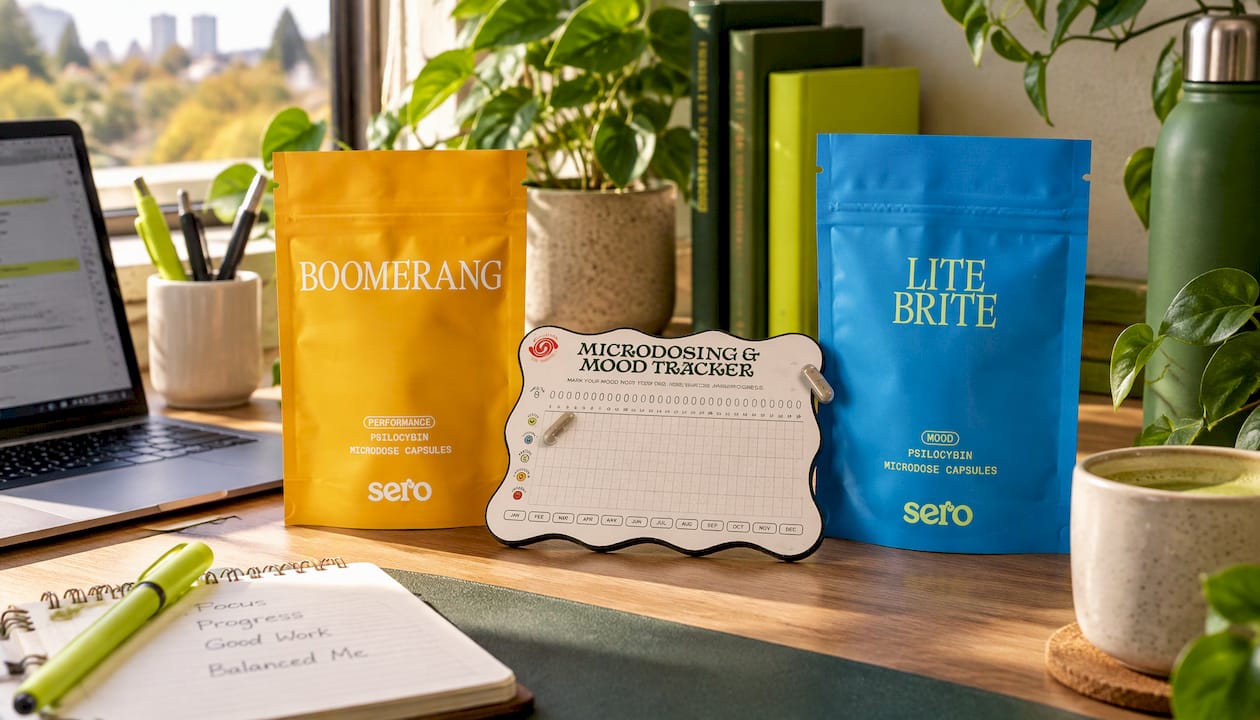
Sero also pairs its products with a community and with education on mushrooms and their traditions, which helps if you are new and want to learn before you start. If you are ready to begin, Sero’s capsules are the simplest place to start a tracked, spaced routine. Sero’s guide on how to buy magic mushrooms online safely in Canada walks through what to look for in a product.
Most routines space doses a few days apart rather than dosing daily. The six-week study of 98 microdosers found the strongest effects on dosing days, with focus and productivity slightly raised two days later. That is why many people choose a rotating schedule, such as the one in Sero’s microdosing schedule guide.
A microdose is meant to stay below the level of obvious effects. Still, judge it by how you feel and behave rather than by what others say. If you feel distracted, anxious or unlike yourself, skip the dose for that day and note it in your log.
Read your workplace’s drug and impairment policy first, since employers commonly prohibit possession and use of psilocybin at work. If you hold a medical authorization, BLG advises telling HR so a health professional can assess whether it is compatible with your duties. If you are struggling with performance or wellbeing, talking to your doctor and HR early is the better path.
Desk, creative and planning work is the usual fit. Work involving driving, heights, precision tools or other safety-critical tasks is not readily compatible with psilocybin use, according to BLG’s guidance. Plan dose days away from those shifts.
Health Canada lists anxiety, panic, confusion, a faster heart rate, higher blood pressure and nausea. The Canadian Public Health Association’s forum report highlights nausea, transient anxiety and headache as the common ones. If any of these show up, pause your plan and speak to your doctor.
This article is for educational and informational purposes only and does not constitute medical advice. Psilocybin is a controlled substance in Canada, legal access is limited. Always consult a qualified healthcare professional before considering microdosing, particularly if you have an existing medical condition or take medication.