Feel Lifted
Looking to microdose and macrodose to improve your mood? Get started with this bundle. .

Psilocybin interacts with a short list of medications in ways that matter: lithium, MAOIs and stimulants carry the most concern, while SSRIs, antipsychotics and anxiety medications mostly change how strong the experience feels. The research behind these combinations is thin, so the safest approach is to know your own medication list, take it to your prescriber or pharmacist, and never change a prescription on your own. At Sero, our microdosing capsules, chocolates and teas come with educational guides on responsible use, and this is the background we think every person should have before they start.
Your body converts psilocybin into psilocin, the compound that produces the effects. Psilocin acts mainly on serotonin receptors, especially one called 5-HT2A. Many psychiatric medications act on the same serotonin system, and that overlap is the source of most of the interaction questions.
There is a second route. Psilocin is primarily metabolised by two liver enzymes, UGT1A10 and UGT1A9, so drugs that inhibit or speed up those enzymes (diclofenac and probenecid are examples) can change how much psilocin your body handles. A third route is the heart: psilocybin raises heart rate and blood pressure, which is why other things that do the same deserve attention. The BCCSU, the University of British Columbia-affiliated substance use research centre, notes these increases settle by about six hours after a dose.
Two mechanisms, then: receptor effects, which change the experience, and cardiovascular or metabolic effects, which change the physical load. Keep them separate and the rest of this article is easier to read.
The most cited overview is a systematic review by Halman and colleagues. It screened 7,102 records and found 52 studies on classic psychedelics, only 10 of them about psilocybin. It covered antidepressants, antipsychotics, anxiolytics, mood stabilisers and recreational drugs. Apart from a few case reports, no serious adverse drug events were described.
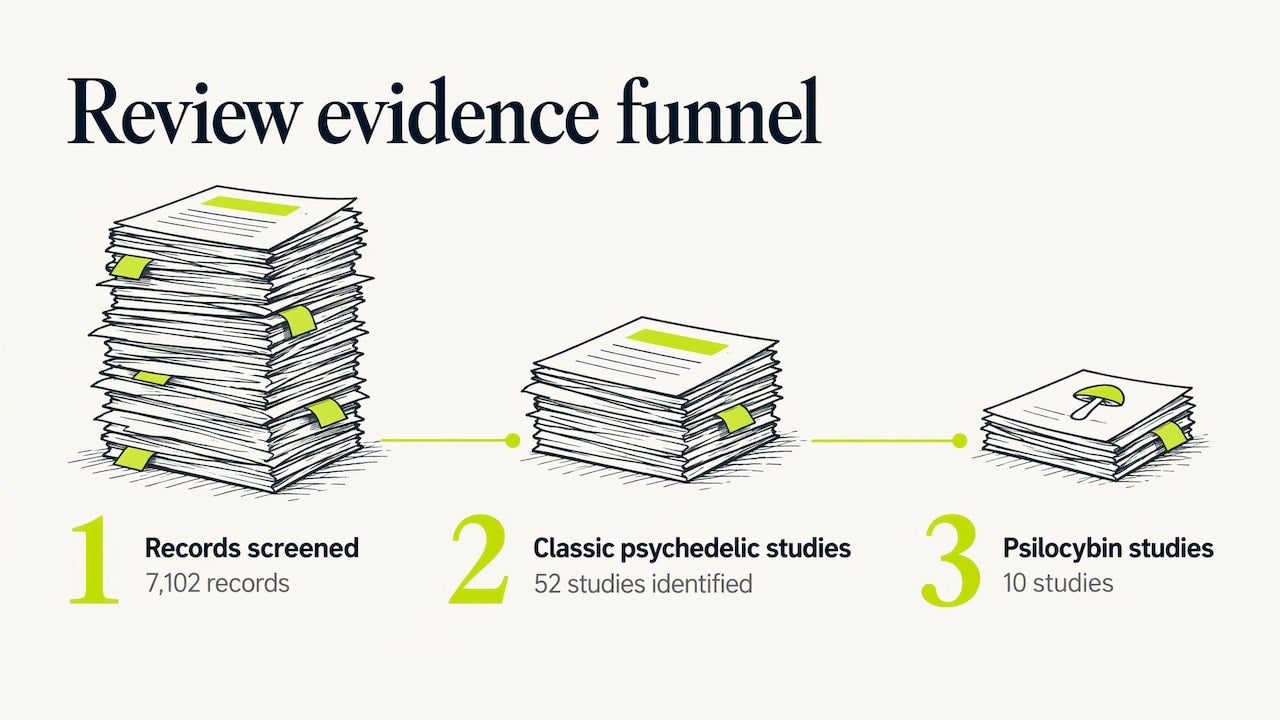
That is reassuring, and it is also limited. A separate review of psychiatric medication interactions found only two psilocybin interaction studies from the last decade. Participants were young, healthy adults given a medication for at most 14 days, which is very different from someone who has taken a prescription daily for years.
The BCCSU’s overview of psilocybin says the evidence for drug-drug interactions overall is not strong, and that concern about serotonin syndrome with antidepressants lacks supporting evidence so far. Serotonin syndrome is a rare condition where too much serotonin activity causes agitation, fever, rapid heartbeat and muscle rigidity. Its reputation is worse than its documented record with psilocybin, but “not documented” is not the same as “ruled out”.
A New Mexico Department of Health medication placement table sorts medications by level of concern with psilocybin. It is a useful way to see where the weight of caution sits.
| Medication or substance | What is reported | Level of concern |
|---|---|---|
| Lithium | Seizure and delirium association | Highest |
| MAOIs | Serotonin and blood pressure effects | Highest |
| Stimulants (amphetamines, cocaine) | Heart rate, blood pressure, cardiovascular strain | Highest |
| SSRIs and SNRIs | Usually blunt effects | Moderate |
| Tricyclic antidepressants | May intensify effects | Moderate |
| Atypical antipsychotics | Blunt or reverse effects | Moderate |
| Benzodiazepines | Calm anxiety, may reduce effects | Moderate |
| Cannabis | Added anxiety and heart rate effects | Moderate |
The table is a planning tool, not a verdict. Your own dose, health history and medication schedule decide what applies to you.
A clinician’s guide published in Psychiatric Times calls lithium perhaps the most critical interaction. Lithium carries its own seizure and delirium risk, psilocybin has been associated with both, and the guide describes the pairing as strongly contraindicated.
The New Mexico table flags lithium use within 30 days as a top-tier concern. That is a long window, and it is why anyone who has recently stopped lithium should talk to the prescriber before anything else.
It helps to know how the signal arose. It comes largely from online reports rather than controlled trials. In a Johns Hopkins analysis of 62 online reports of lithium combined with a classic psychedelic, about half involved seizures. The psilocybin-specific numbers are smaller and the mechanism is not established. The signal appears specific to lithium rather than to mood stabilisers in general, and since the evidence is weak in design, the sensible reading is simple: if you take lithium, do not combine it with psilocybin.
Monoamine oxidase inhibitors (MAOIs) are an older class of antidepressant. The same clinician’s guide says they are generally contraindicated with psilocybin, both because of hypertension and overheating risk and because blocking the MAO-A enzyme may slow the breakdown of psilocin.
There is a documented case behind the caution. Memorial Sloan Kettering describes a patient on an MAOI who developed severe hypertension with chest pain, palpitations and headache, and needed emergency treatment including cardiac catheterization. Treat that as a reason to be exact about your medication list, including anything you took in recent weeks.
St John’s wort is another one to flag. The clinician’s guide advises avoiding it with psilocybin. Linezolid, an antibiotic, may attenuate effects, and metoclopramide, a nausea medication, should be avoided. These are easy to overlook because they are not psychiatric drugs.
SSRIs (selective serotonin reuptake inhibitors) are the most common antidepressants, so this is the question most readers have.
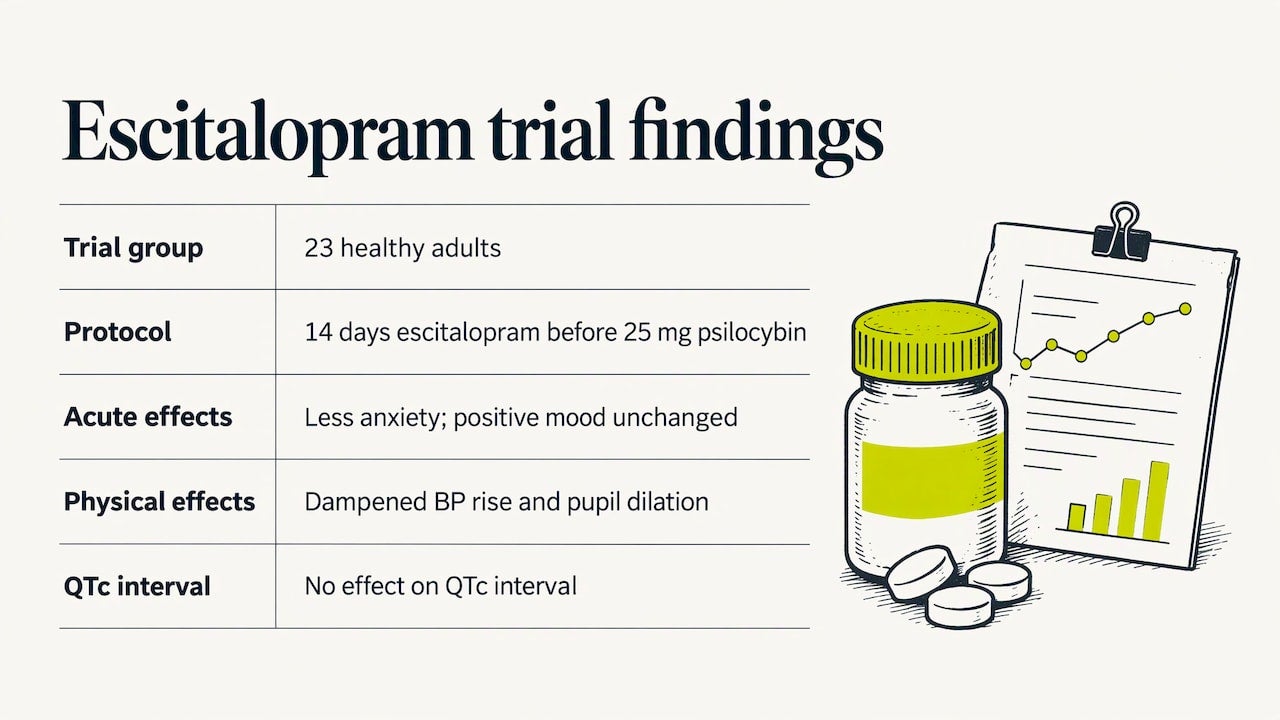
What the evidence shows is mixed in a reassuring direction. In a 2022 randomised trial of 23 healthy adults, 14 days of escitalopram before a 25 mg dose of psilocybin reduced negative acute effects such as anxiety, while positive mood effects were not reduced and psilocin levels were unchanged. The same trial found escitalopram dampened the blood pressure rise and pupil dilation and showed no effect on the QTc interval, a measure of the heart’s electrical cycle.
In day-to-day life, people who take SSRIs long term often report weaker effects, and a student review from MacEwan University reports that fluoxetine appears to attenuate psilocybin’s mind-altering effects. Some long-term users in the review also had severe blood pressure spikes, so this is not a risk-free area.
Overall, a 2022 review in Frontiers in Psychiatry says tricyclic antidepressants may increase intensity, while MAOIs and SSRIs may decrease it. It also points out that clinical trials require tapering and washout of these medications, even though published cases of serotonin toxicity are lacking. Tapering is a medical decision. Doing it yourself to line up with a dose is a different matter entirely, and one to avoid.
These drugs mostly work by changing what psilocybin does to the mind.
The BCCSU’s backgrounder adds that there is no evidence that antipsychotics, serotonin agonists or SSRIs raise the risk of serious adverse outcomes, though they may blunt or enhance effects. In practice, the main consequence of these combinations is an experience that does not match what you expected, and for a microdose user that changes the whole point of the routine.
Stimulants deserve the same respect as lithium and MAOIs. Psilocybin and stimulants both raise heart rate and blood pressure, so together they risk autonomic instability, meaning the body’s automatic controls for heart rate, temperature and blood pressure get pushed too far. The review reported a cardiac arrest in a man on a prescription stimulant that was linked to mushroom use, and the clinician’s guide says stimulants are avoided. This covers prescription ADHD medications, cocaine and large amounts of caffeine-heavy energy products. If you take a prescribed stimulant, the ADHD and microdosing article is a good place to start, and your prescriber is the person to confirm what applies to you.
Alcohol and cannabis are the interactions most people actually meet. The Halman review lists alcohol among the substances tested with psilocybin, and the New Mexico table puts cannabis in its moderate tier. Both add to heart rate, anxiety or impaired judgment. Many Sero customers are interested in cutting back on drinking, and our piece on replacing alcohol with microdosing covers that choice.
Interaction charts look more certain than they are. Three habits make them safer to use.
The WebMD entry on psilocybin, updated in April 2026, puts it directly: interactions with medicines are not fully understood, and you should check with a health care provider. That advice is the right one to follow.
A short routine takes the guesswork out of the decision.
Our guide to psilocybin therapy walks through preparation and setting in more detail.
Call 911 for chest pain, trouble breathing, a very fast or pounding heartbeat that does not settle, a seizure, fainting or being unable to wake someone, being very hot and confused, or anyone who may harm themselves or others. These match the warning signs for the serious combinations above: seizures with lithium, severe hypertension with MAOIs, and cardiac strain with stimulants. If distress is emotional rather than physical, 9-8-8, Canada’s suicide crisis helpline, is available.
Stay with anyone who is struggling, tell the responders every substance and medication involved, and do not wait to see whether it passes.
If your medication list is clear and your prescriber is comfortable with your plans, the next question is the product. Sero offers microdosing capsules, magic mushroom chocolate and magic mushroom tea. Our products are sustainably harvested, chemical-free and paired with educational resources and guides for responsible use, so you can keep your dosing simple and your notes consistent.
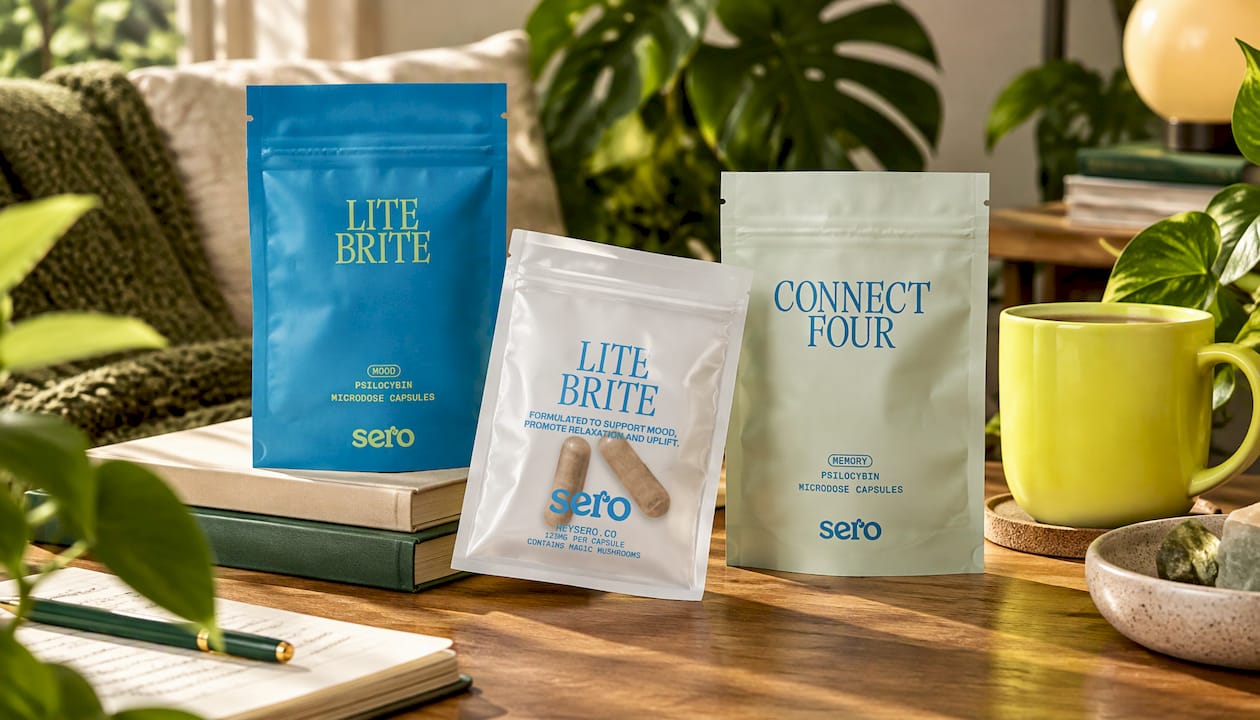
The three formats let you choose how you take a low dose, whether that is a capsule in the morning, a square of chocolate or a cup of tea. More than 5,000 reviews from our customers describe their results, and our guides are there to help you build a routine that you can then review with your prescriber or pharmacist.
The combinations with the strongest warnings are lithium, MAOIs and stimulants such as amphetamines and cocaine. Alcohol and cannabis also raise risks of anxiety and cardiovascular strain. Because many drugs have never been studied with psilocybin, review your full list with a prescriber or pharmacist.
The research suggests SSRIs usually blunt psilocybin’s effects instead of producing documented serious harm, and the BCCSU reports no evidence that SSRIs raise the risk of serious adverse outcomes. Tricyclics may intensify effects and MAOIs are generally avoided. Do not stop an antidepressant on your own; any change should be made with your prescriber.
Anyone taking lithium or an MAOI should avoid it, as should people using stimulants. Those with bipolar disorder or a personal or family history of psychosis should speak with a doctor first. Cardiovascular conditions are worth raising too, because psilocybin raises heart rate and blood pressure for several hours.
Probably yes. Prescription stimulants raise heart rate and blood pressure, and so does psilocybin, which is why stimulants sit in the highest-concern group in the New Mexico table. Ask your prescriber or pharmacist about your specific medication and timing before using psilocybin.
This article is for educational and informational purposes only and does not constitute medical advice. Psilocybin is a controlled substance in Canada, legal access is limited. Always consult a qualified healthcare professional before considering microdosing, particularly if you have an existing medical condition or take medication.