Feel Lifted
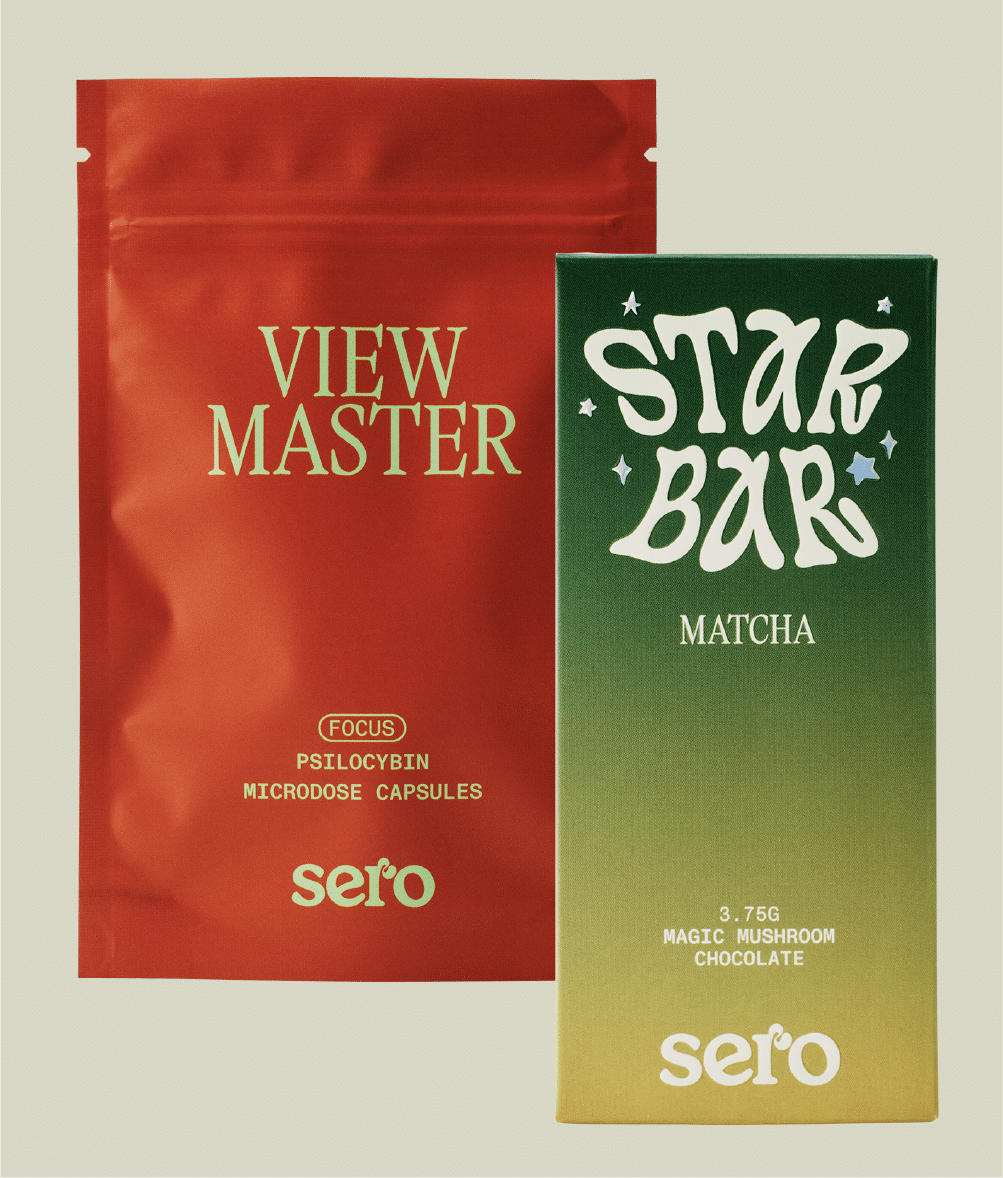
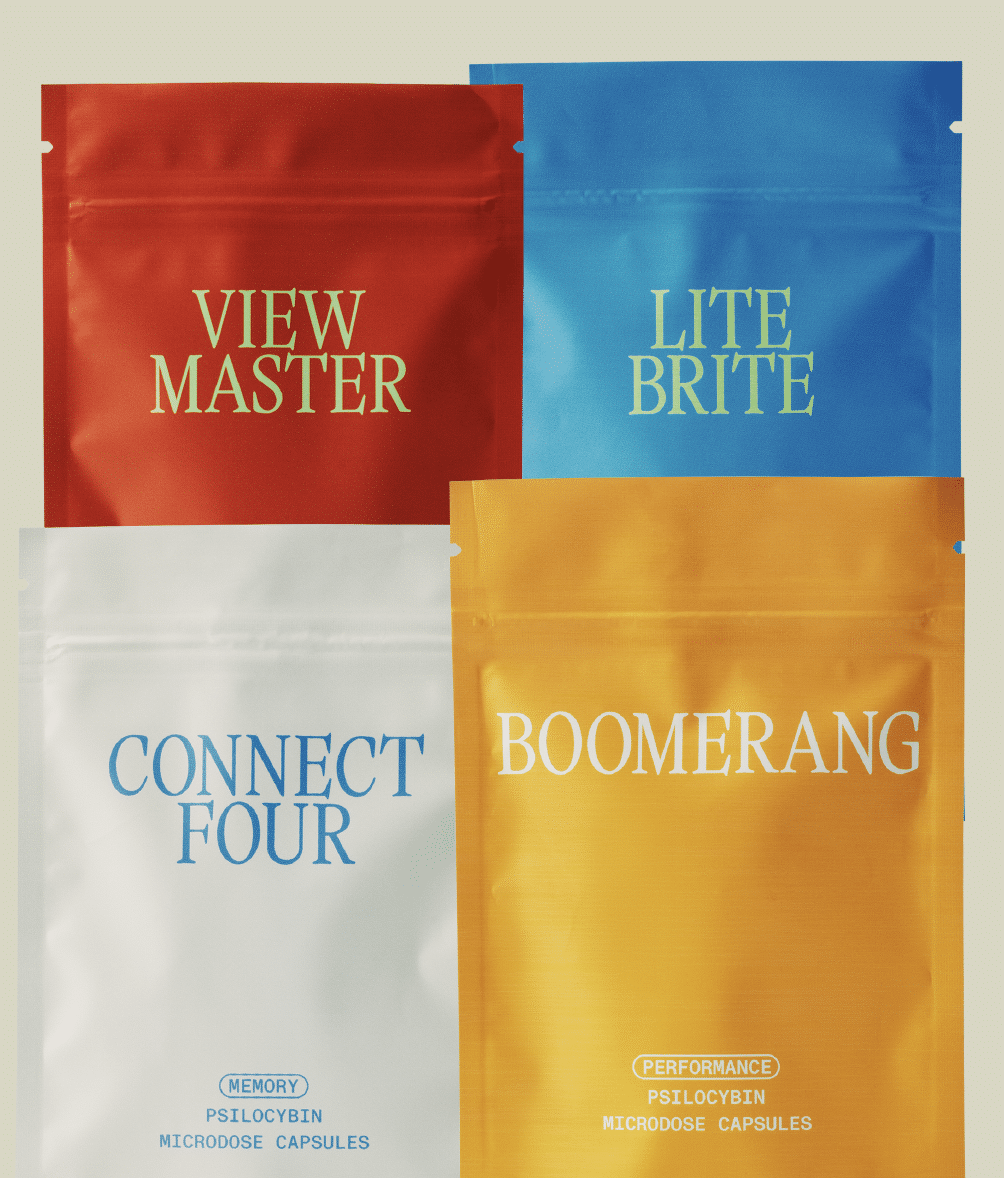
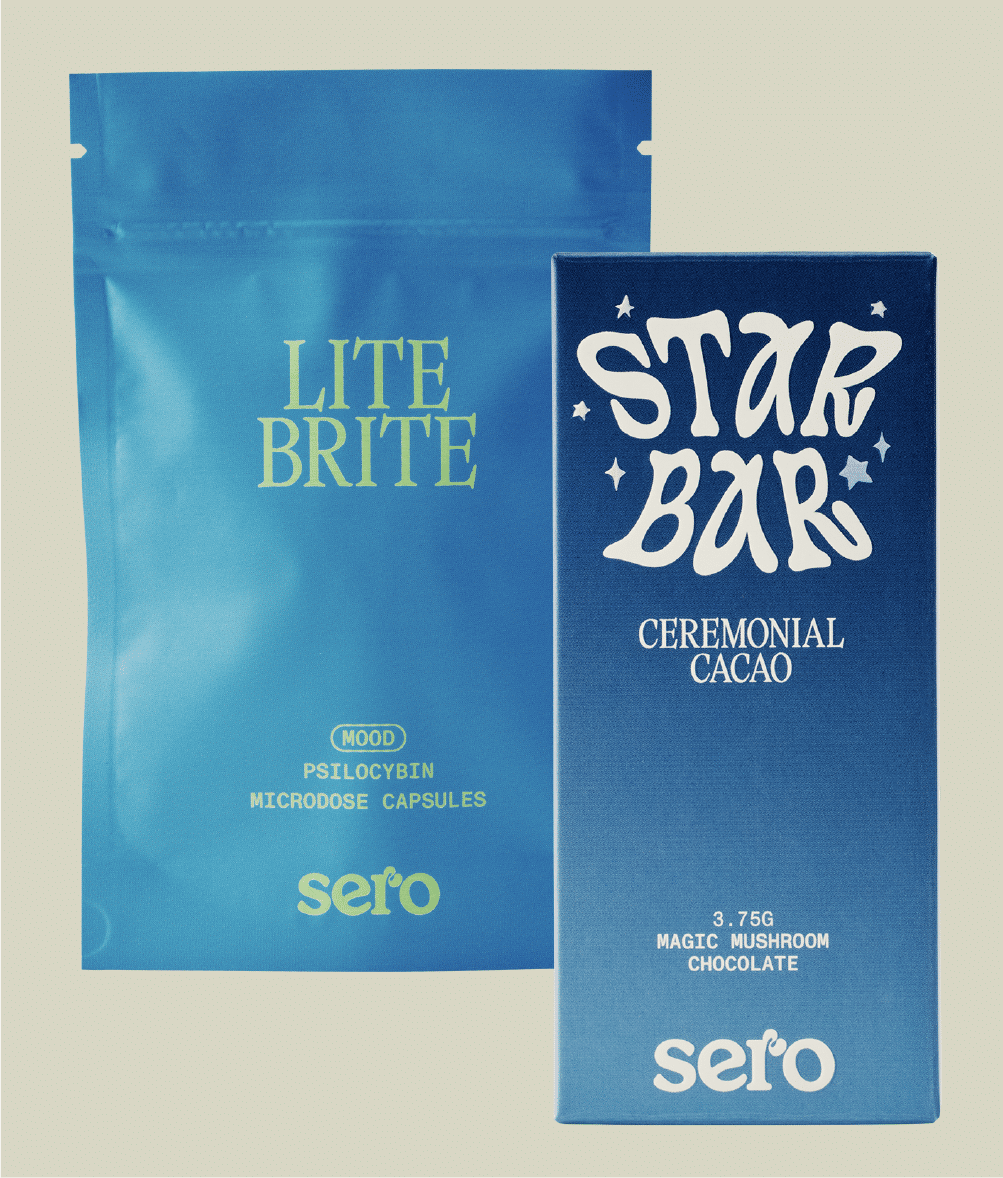
Looking to microdose and macrodose to improve your mood? Get started with this bundle. .

Microdosing for anxiety means taking a very small, regular amount of psilocybin, the compound in magic mushrooms, far below the amount that causes a trip. The aim is a calmer, steadier baseline, not an altered state. What matters most is a consistent, measured dose from a product made with care, and a way to keep track of how you feel. That is how Canadian researchers are approaching it, and it is the idea behind our capsules, chocolates and teas.
This guide explains what a microdose looks like, what Canadian studies are testing, how to approach it thoughtfully, and who should talk to a health care provider first.
A full psilocybin experience, the kind studied in therapy settings, lasts hours and changes perception. Microdosing is the opposite end of the scale. The dose is small enough that you go about your day, work, cook, walk the dog, and the idea is that mood and stress reactivity shift gently over days and weeks.
Three things define it:
If you want a plain-language look at what that gentle shift can feel like day to day, our piece on microdosing and feeling the effects walks through it.
Canada is one of the places where this question is being studied properly. In October 2025, CBC News reported that the Kingston Health Sciences Centre Research Institute is leading the first Phase 2 clinical trial approved by Health Canada to test microdosing for anxiety. Led by Queen’s University psychiatry professor Dr. Claudio Soares, it involves up to 60 adults with debilitating anxiety.
The design is worth knowing because it shows what a thoughtful microdosing routine looks like:
Dr. Soares has pointed out that stories about microdosing for mental health are common, while studies in a controlled setting, where everyone knows exactly what dose was taken and for how long, are still rare. That is exactly the gap this trial is built to fill.
There is also research looking across studies. A 2026 systematic review of psilocybin microdosing looked at five studies that examined anxiety-related symptoms, and three of them reported improvement. The people in those studies differed: the clinical trials enrolled healthy adults, while the surveys and interviews involved people who were microdosing for mental health symptoms. The takeaway for you is that the field is active, the questions are being asked carefully, and the Canadian trial will add controlled data for people with anxiety.
If you read first-hand accounts of microdosing, a pattern emerges. The people who describe the clearest experience tend to be the ones who kept things simple and measured. The trial protocol makes the same point: a fixed amount, a fixed schedule, a fixed period.
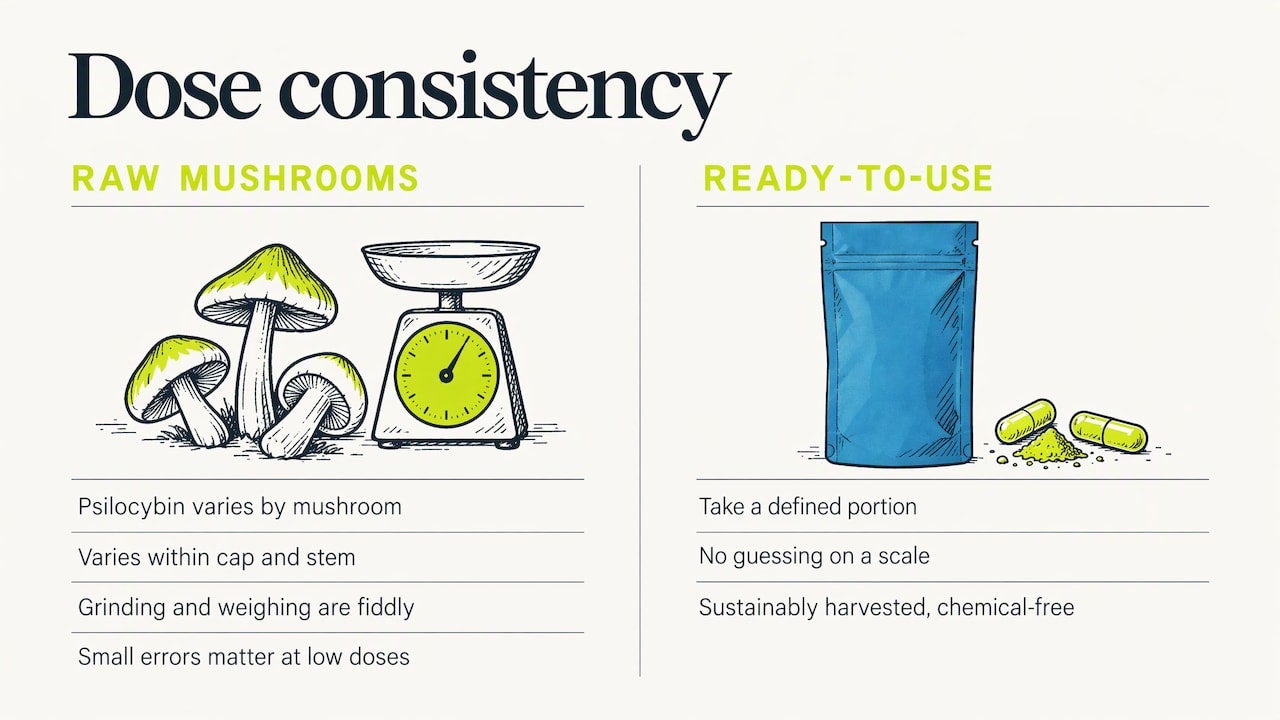
The challenge with raw mushrooms is that the amount of psilocybin varies from one mushroom to the next, and even within one cap and stem. Psilocybin is produced by many mushroom species around the world, and Psilocybe cubensis is the most widespread species in its genus, but widespread does not mean uniform. Grinding, weighing and portioning at home on a kitchen scale is fiddly, and a small error matters when the whole point is a small dose.
This is why we sell microdosing in ready-to-use forms. Our products are sustainably harvested, chemical-free and made so that you take a defined portion rather than guessing. You spend your attention on how you feel, not on a scale.
Anxiety tends to be tied to routine: the morning commute, a busy afternoon, an evening that will not slow down. The format you choose should fit the moment you want to support.
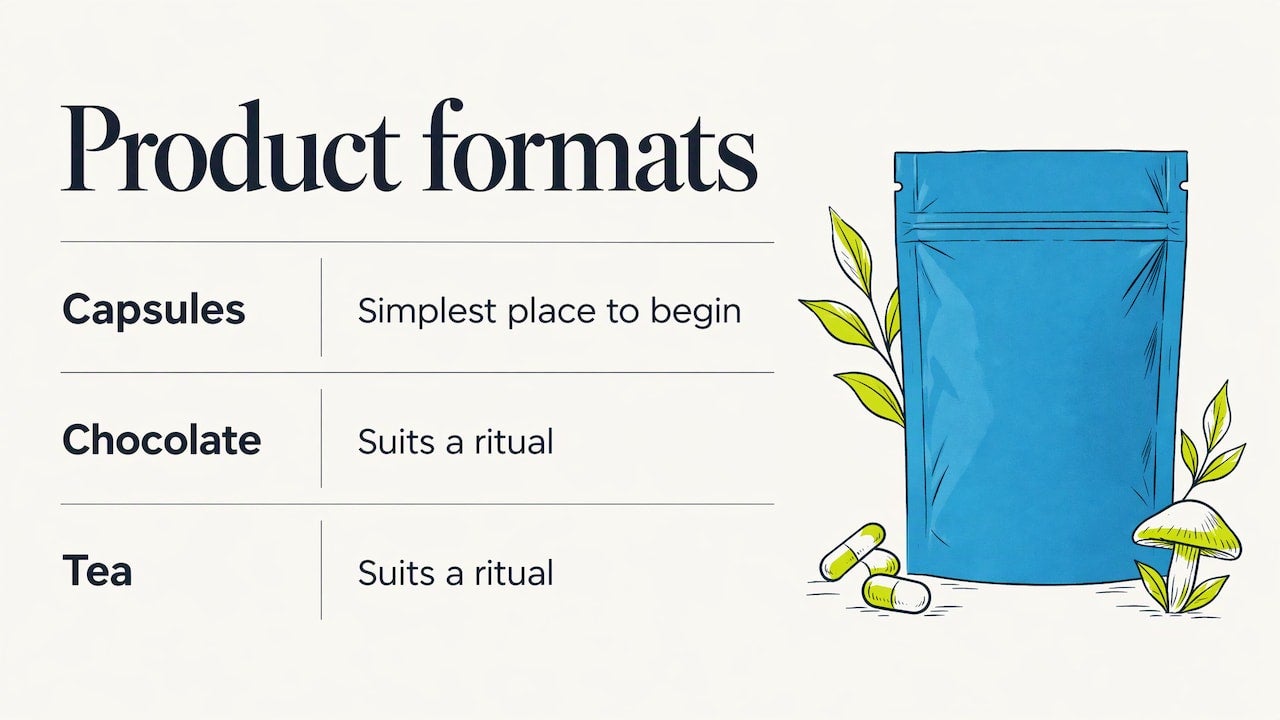
| Format | How it fits | Suits |
|---|---|---|
| Microdosing capsules | Swallowed with water, no taste, easy to build into a morning routine | People who want the simplest, most repeatable habit |
| Magic mushroom chocolate | A small, pleasant ritual, taken like a treat | People who like a sensory, unhurried routine |
| Magic mushroom tea | A warm cup that doubles as a pause in the day | People who want a calming evening or midday ritual |
We also offer curated blends that pair psilocybin with functional ingredients, each aimed at a distinct goal such as mood, focus or creativity. If you are mainly after emotional balance, start by looking at the blend descriptions on the product pages, then pick the format that suits your routine.
You do not need a complicated system. The most useful habits are the same ones researchers use to make sense of their results.
Two minutes is enough. Each evening, note your anxiety on a scale of 1 to 10, your sleep, your energy, and anything unusual. Anxiety fluctuates with workload, weather, news and sleep, so a single good or bad day tells you little. A few weeks of notes tell you much more.
If you change your dose, your caffeine, your sleep schedule and your exercise all in the same week, you will not know what made the difference. Change one thing at a time.
The Kingston trial runs for weeks, not days, and a defined stretch gives you a fair view of your own pattern. Many people choose a set period, review their log at the end, and then decide what to do next.
Walks, time outside, good sleep, conversation with people you trust and creative time all work alongside a microdosing routine. Our guide to microdosing for depression and anxiety goes further into building those habits around it.
Microdosing is gentle by design, but psilocybin is still an active compound, and Health Canada’s guidance on psilocybin names specific situations that call for care. Here is what it says, in plain terms:
Health Canada also encourages anyone dealing with anxiety or another disorder to talk with their health care provider about the options available. If you take prescription medication, particularly for anxiety or mood, bring it up with your doctor or pharmacist before adding anything new. They know your history, and they can tell you what is safe alongside it.
If your anxiety is severe, constant or getting in the way of daily life, start with your family doctor. A microdosing routine is something you can discuss with them as part of the bigger picture. If you are ever in crisis, contact 9-8-8, Canada’s Suicide Crisis Helpline, or your local emergency services.
People come to microdosing for different reasons, and anxiety is often only one of them. Our customers include:
If focus is your main goal rather than worry, you may also want to read about ADHD, ADD and microdosing.
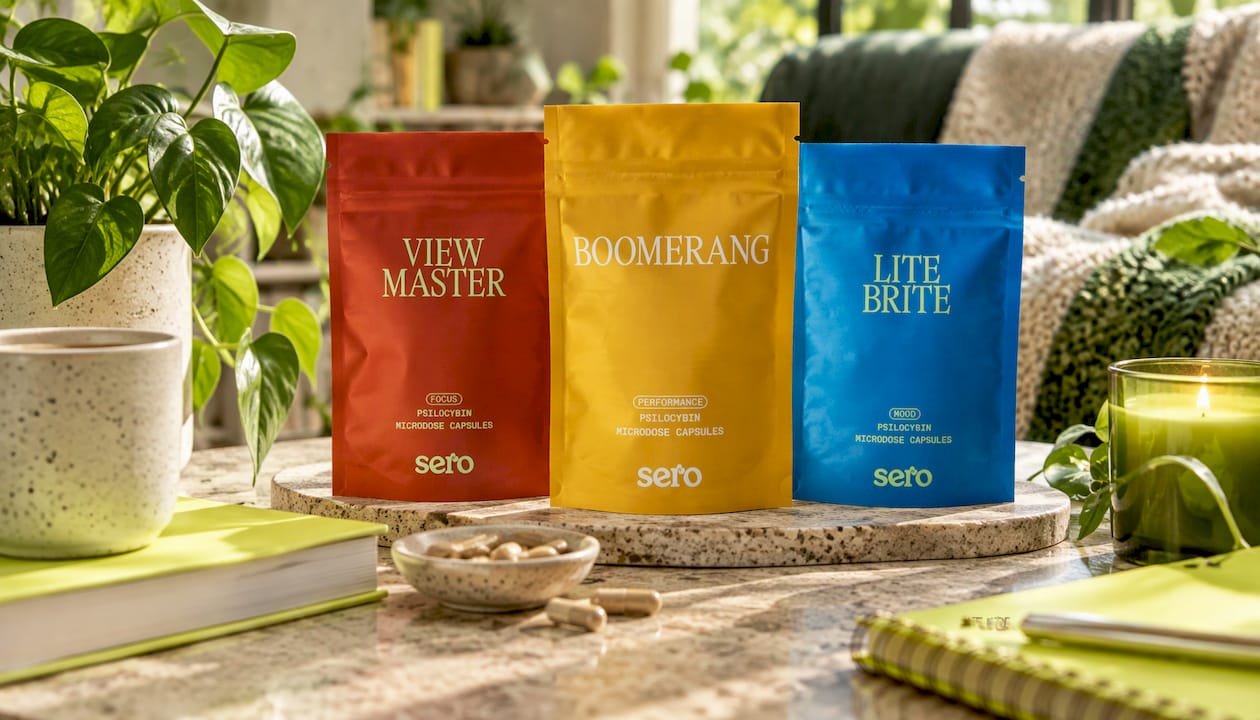
A microdosing routine only works if it is steady, and steadiness starts with the product. We sell capsules, chocolates and teas, along with curated blends, that are sustainably and ethically sourced, chemical-free and supported by educational guides on responsible use. Our community of customers has left over 5,000 reviews, and we acknowledge the indigenous traditions that mushrooms come from.
If you are ready to start, the microdosing capsules are the simplest place to begin, while the chocolate and tea suit those who prefer a ritual. For a walkthrough of ordering, see our guide on how to buy magic mushrooms online in Canada.
We also keep our written guides current as new Canadian research arrives, so you can come back to them as the science develops.
The Kingston trial is one piece of a growing Canadian research effort. A Phase 3 trial (NCT07063862) is recruiting at sites in Ontario and Quebec, with primary completion estimated for August 2027, and Toronto researchers have run an eight-week study in which 20 people with clinical depression received weekly microdoses or a placebo. Each of these studies adds detail on dose, schedule and who benefits.
That is useful for you in a practical way. As results come in, the questions people ask will sharpen from “does it work at all” to “which dose, how often and for whom”. Keeping your own log now means you will be ready to compare your experience with whatever the research shows.
Psilocybin is produced by many mushroom species around the world, and Psilocybe cubensis is the most widespread in its genus. What matters for a microdosing routine is not the species name but a consistent, measured amount of psilocybin in every dose. That is why we offer products in set portions.
The Kingston trial uses about 2 to 3 mg of psilocybin daily for four weeks, then randomizes participants to more microdoses or placebo for another four weeks. That is a research protocol for adults with debilitating anxiety, supervised by a clinical team. If you have a diagnosed condition, talk to your doctor before starting any routine of your own.
Health Canada warns that risks are elevated when mushrooms are combined with cannabis, amphetamines or alcohol, and for people with existing psychiatric conditions or heart disease. If you take any prescription medication, speak with your doctor or pharmacist before you begin.
Researchers run their protocols for weeks at a time, with a clear start and end. A defined stretch of a few weeks, with a short daily log, gives you a fair view of how you feel and lets you decide the next step with a clear head. Your doctor can help you plan that if you live with anxiety.
This article is for general information only and is not medical advice. Psilocybin products are not approved therapeutic products in Canada. Speak with a qualified health care provider about your own situation before making any changes to your care.
This article is for educational and informational purposes only and does not constitute medical advice. Psilocybin is a controlled substance in Canada, legal access is limited. Always consult a qualified healthcare professional before considering microdosing, particularly if you have an existing medical condition or take medication.