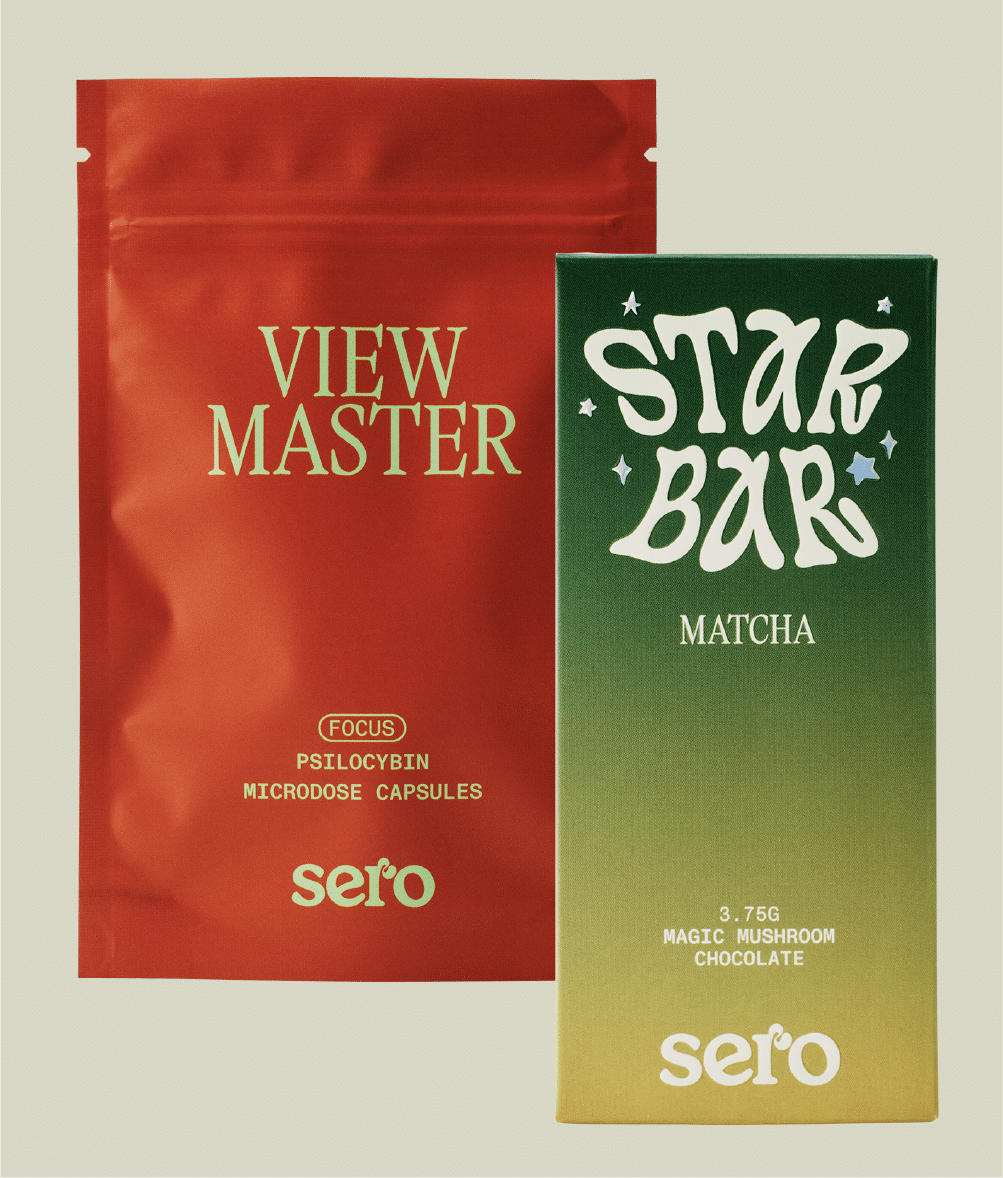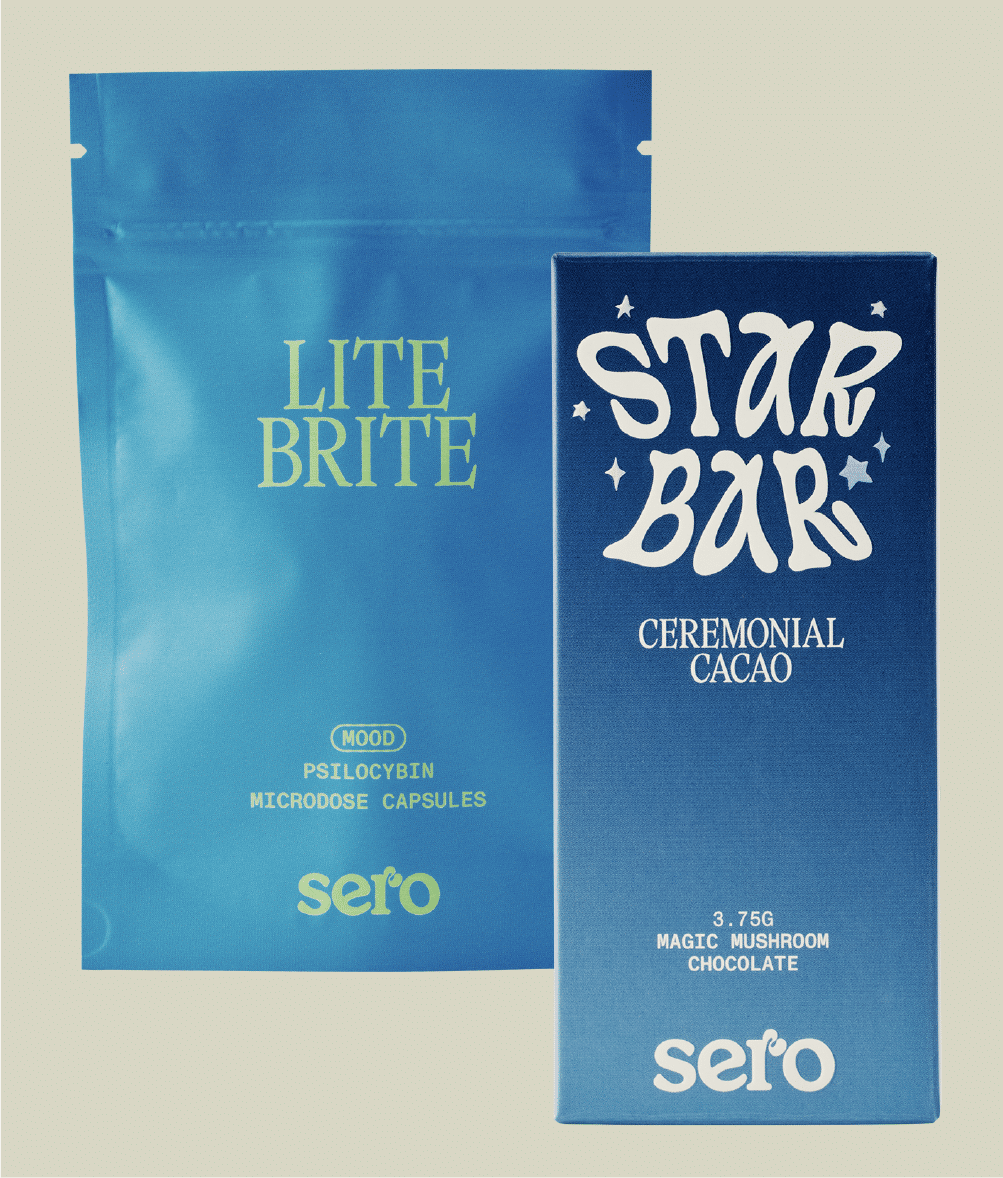
Feel Lifted
Looking to microdose and macrodose to improve your mood? Get started with this bundle. .

Psilocybin appears to open a temporary window of heightened neuroplasticity, the brain’s ability to reorganize its connections. In animal studies it triggers new growth of synapses and dendritic spines. In human imaging studies it loosens entrenched network patterns for weeks, and one 2026 study linked a single dose to greater cognitive flexibility a month later. If you are exploring psilocybin for mental clarity, emotional balance or creative thinking, this guide explains what is known, what is still being worked out and how to read the headlines. At Sero, we make microdosing capsules, chocolates and teas, and we think a reader who understands the science makes better, safer decisions.
Neuroplasticity is the nervous system’s ability to change its structure and function in response to experience. Psilocybin acts on the 5-HT2A receptor and has been linked to plasticity-related gene activity, including BDNF.
In animals, a single dose has produced larger and denser dendritic spines that lasted at least a month. Human studies show changes in brain connectivity lasting weeks.
A May 2026 study of 28 healthy adults found higher cognitive flexibility, insight and well-being one month after a 25 mg dose.
The plasticity “window” interacts with what you do during it: habits, reflection and learning shape what sticks.
In Canada, psilocybin is a controlled substance. Read the legal and safety notes below before you act on any of this.
Neuroplasticity is the nervous system’s ability to reorganize its structure and function to adapt to its environment. It is essential for learning, memory and recovery. Every time you learn a skill, form a habit or change how you respond to a stressful situation, connections between neurons are strengthened, pruned or built.
Three levels matter when you read about it:
Cells and synapses: neurons grow small branches called dendrites, covered in tiny protrusions called spines, where connections form. More and larger spines generally mean more capacity for connection.
Circuits: groups of neurons that work together can become more or less tightly coupled.
Networks: large-scale systems, such as the default mode network (DMN), which is most active when your mind wanders or you think about yourself, can shift how they communicate.
Psilocybin has been studied at all three levels, which is why the topic can feel confusing. A cell-level finding in a mouse is not the same as a change in how a person thinks.
Your body converts psilocybin to psilocin, which acts at the 5-HT2A serotonin receptor. According to a review in Neuropsychopharmacology, this action appears to promote expression of plasticity-related genes, including BDNF, catalyze a burst of synaptic and dendritic growth, and strengthen long-term potentiation, a process in which synapses become more responsive with use. BDNF is a protein that supports the growth and survival of neurons.
Researchers have coined the term “psychoplastogens” for compounds that rapidly induce neuroplasticity after a single dose, leading to long-lasting changes in behaviour. That sets them apart from conventional antidepressants, which promote plasticity only after chronic administration.
A February 2026 review in Nature Medicine describes two complementary processes that preclinical and human research converge on:
Acute neural desynchronization: during the experience, entrenched patterns of network activity are destabilized.
Subacute neuroplasticity: in the days and weeks afterwards, a window opens for psychological and behavioural change.
Think of it as loosening soil before planting. The loosening is not the garden. What grows depends on what you plant.
Most of the finest-grained evidence comes from animal work, where researchers can image individual neurons.
A 2021 systematic review of 16 preclinical and 4 clinical studies found that a single psychedelic administration rapidly changes plasticity mechanisms at the molecular, neuronal, synaptic and dendritic levels. Increased dendritic complexity outlasted the acute drug effects. Repeated administration stimulated neurogenesis and raised BDNF mRNA levels for up to a month.
A January 2025 review reports that in mice given 1 mg/kg psilocybin, two-photon microscopy showed a persistent increase in cortical dendritic spine size and density lasting at least one month. In pigs given a low intravenous dose, a marker of synaptic density rose in the hippocampus and prefrontal cortex.
A 2023 review notes that psilocybin-induced structural changes in the mouse prefrontal cortex were long-lasting.
The doses in animal studies are scaled to body weight and species, so they do not translate directly to what a person takes. Calder and Hasler note that in rats, 4 mg/kg was needed to change plasticity-related gene expression, in a dose-dependent way, and that clear dose-response effects have not yet been established in people. Treat animal numbers as evidence for a mechanism, not as a dosing guide.
Human studies cannot count spines in a living brain, so researchers use MRI to measure how regions communicate and how white-matter pathways are organized.
In a 2024 Nature study, healthy adults had around 18 MRI visits before, during and up to three weeks after a single 25 mg dose. The researchers found more than threefold greater functional-connectivity change than with methylphenidate, strongest in the default mode network, plus a decrease in connectivity between the anterior hippocampus and the DMN that lasted for weeks.
A March 2026 systematic review of fMRI studies found that psilocybin acutely increases connectivity within the executive control network and between that network and other resting-state networks, including the DMN. The executive control network supports planning, attention and switching between tasks.
A 2021 study in a small group of healthy people found executive-control-network connectivity was significantly decreased one week after a single dose, and that this decrease predicted higher mindfulness three months later.
A May 2026 study of 28 psychedelic-naive healthy adults used diffusion imaging, which maps white-matter pathways. One month after a 25 mg dose, it found changes in prefrontal-subcortical tracts linked to lower network modularity, alongside increases in cognitive flexibility, psychological insight and well-being. A 1 mg placebo dose produced no such effects.
The last result matters most for readers interested in mental flexibility. Cognitive flexibility is the ability to shift between ideas, see a problem from a new angle and adjust to change. It is the closest measured match to what people mean when they say they want to “think more flexibly” or “get unstuck”.
The published evidence describes changes that last weeks to a month in the studies above, and in mice, spine changes measured at one month. Researchers have not shown that a single dose permanently rewires the brain, and the word “rewire” in headlines is shorthand, not a finding. The more useful question is what you do with the window. Calder and Hasler explain that neuroplasticity is activity-dependent at the cellular level and experience-dependent at the level of behaviour. In practice, the period after psilocybin interacts with what you do and learn during it.
The Nature Medicine review also lists open questions: how subjective experience relates to clinical response, risks inherent to enhanced neuroplasticity, trial design and regulation. A 2023 review adds that it is not yet known whether plasticity effects can be separated from the psychedelic experience itself. The science is moving quickly, and honest summaries say so.
If your goal is mental clarity, emotional balance or creative inspiration, here is a grounded reading of the evidence.
Mental flexibility. The strongest direct human signal is the May 2026 study linking a single 25 mg dose to higher cognitive flexibility, insight and well-being at one month. That is a small study of healthy adults under research conditions, not a promise for any individual.
Emotional balance. A 2024 systematic review of 20 studies and 2,959 participants found that emotional processing was positively modified, and emotional empathy was enhanced. The effects on attention, working memory and executive function were reported especially in people with treatment-resistant depression.
Creativity. Creative work depends on breaking habitual associations, which is what reduced coupling in the default mode network is thought to loosen. The link is a reasonable hypothesis drawn from the connectivity data. It is not a measured guarantee of more ideas.
Using the window. Because plasticity is experience-dependent, people who explore psilocybin often pair it with intentional routines: journaling, time in nature, therapy, movement, regular sleep. Our guides on feeling the effects of microdosing and microdosing 101 cover how people structure those routines. If you are interested in the therapeutic side, our guide to psilocybin therapy explains how supervised approaches work.

Short-term effects. CAMH lists distress, fear, anxiety, paranoia and loss of motor coordination among possible short-term effects. The BC guide adds increased heart rate and blood pressure. It lists a microdose as 0.1 to 0.25 g of dried mushroom.
Who should speak to a doctor first. If you have a personal or family history of psychosis or bipolar disorder, a heart condition or high blood pressure, take psychiatric medication, or are pregnant or breastfeeding, talk to your physician or pharmacist before considering any psychoactive substance. Those groups are the ones most often flagged in medical guidance.
Set and setting. Choose a calm place, avoid driving or operating machinery, avoid mixing with alcohol, and do not go through it alone if you feel anxious.
We take responsible use seriously, which is why we publish guides on dosing and effects alongside our products.
If you have read the research and want to explore microdosing for clarity, focus or creative work, our range is built around controlled, low-dose formats: microdosing capsules, magic mushroom chocolate and magic mushroom tea. Our products are sustainably harvested, ethically sourced and chemical-free, and each comes with educational resources and guides for responsible use. You can see the full lineup in our microdose collection, compare formats in the chocolate and tea categories, or start with our microdosing capsules.

More than 5,000 customer reviews describe the results people have had with Sero. Our ADHD and microdosing article and our piece on shadow work and psilocybin go deeper on personal growth and focus.
You will see new studies every month. Four questions will help you judge them:
Who was studied? Mice, pigs, healthy volunteers and patients answer different questions.
What dose, and how many? A 25 mg dose in a lab is not a microdose, and a single dose is not repeated use.
What was measured? Spine density, BDNF levels, MRI connectivity and a questionnaire score are different kinds of evidence.
How long did it last? Hours, weeks and a month are not “permanent”.
With those four checks, a claim like “psilocybin rewires the brain” becomes something you can place. Cell-level growth in animals is well supported. Network changes lasting weeks in people are documented. Long-term outcomes in daily life are an active area of research.
Psychedelics have been shown to change how brain networks communicate and, in animals, to increase the size and density of dendritic spines. In people, connectivity changes have lasted weeks. “Rewire” is a popular shorthand rather than a measured permanent outcome.
In mice, increased spine size and density lasted at least one month. In healthy adults, a decrease in hippocampus-to-DMN connectivity lasted for weeks after a single 25 mg dose, and a 2026 study found imaging changes and higher cognitive flexibility one month later.
BDNF is a growth-supporting protein that rises in animal studies after psilocybin. In people, the results from blood measurements have varied between studies, so researchers rely more on brain imaging and behavioural measures to track plasticity.
The closest human evidence is the 2026 study linking a single dose to improved cognitive flexibility and insight at one month. Reduced default-mode-network coupling is a plausible route to fresher thinking, though larger studies are needed to measure creativity directly.
Psilocybin is a controlled substance in Canada. Legal access is limited to Health Canada’s Special Access Program and section 56(1) exemptions, as described by BC Centre on Substance Use and CAMH. Speak to a physician if you have a health condition that concerns you.
Towards an understanding of psychedelic-induced neuroplasticity (Neuropsychopharmacology, 2022)
Psychedelics and Neuroplasticity: A Systematic Review (Frontiers in Psychiatry, 2021)
Psychedelics and Neural Plasticity: Therapeutic Implications (PMC, 2022)
Psychedelic-Induced Neural Plasticity: A Comprehensive Review (PMC, 2025)
Psilocybin effects on brain functional connectivity: a systematic review (PMC, 2026)
Lasting effects of a single psilocybin dose on resting-state functional connectivity (PMC, 2021)
Impact of psilocybin on cognitive function: a systematic review (PMC, 2024)
Psilocybin: Psychedelics at a Glance (BC Centre on Substance Use, 2024)
This article is for educational and informational purposes only and does not constitute medical advice. Always consult a qualified healthcare professional before considering microdosing, particularly if you have an existing medical condition or take medication.