Feel Lifted
Looking to microdose and macrodose to improve your mood? Get started with this bundle. .
Psilocybin is being studied as part of treatment for alcohol, tobacco and some other substance use disorders, and early trials are promising. It is still experimental, and the results come from supervised therapy with trained clinicians, not from taking mushrooms on your own. If you are curious about psilocybin for focus, mood or emotional balance, our microdosing guide covers that side. If you are dealing with addiction, this article shows what the trials found and where to get support in Canada.
Trials of psilocybin-assisted therapy for alcohol and tobacco use disorder show encouraging results, but the studies are small and the field is still experimental.
In the studies, psilocybin is given in a few high-dose sessions with psychotherapy, which is different from microdosing.
Health Canada says no psilocybin products are approved for therapeutic use, and research access runs through clinical trials and authorized pathways.
Psilocybin is not considered physically addictive, though psychological dependence is possible.
If you are struggling with substance use, a provincial helpline or your health care provider is the right first call.
Most studies are on alcohol and tobacco. A systematic review that searched trials up to May 2024 found that 43.75% of the studies it summarised focused on alcohol use disorder and 31.25% on tobacco. The rest looked at cocaine, opioids and nicotine. In that review, psilocybin-assisted psychotherapy was linked to lower alcohol use, higher smoking cessation and psychological improvements. The authors also said larger trials are needed.
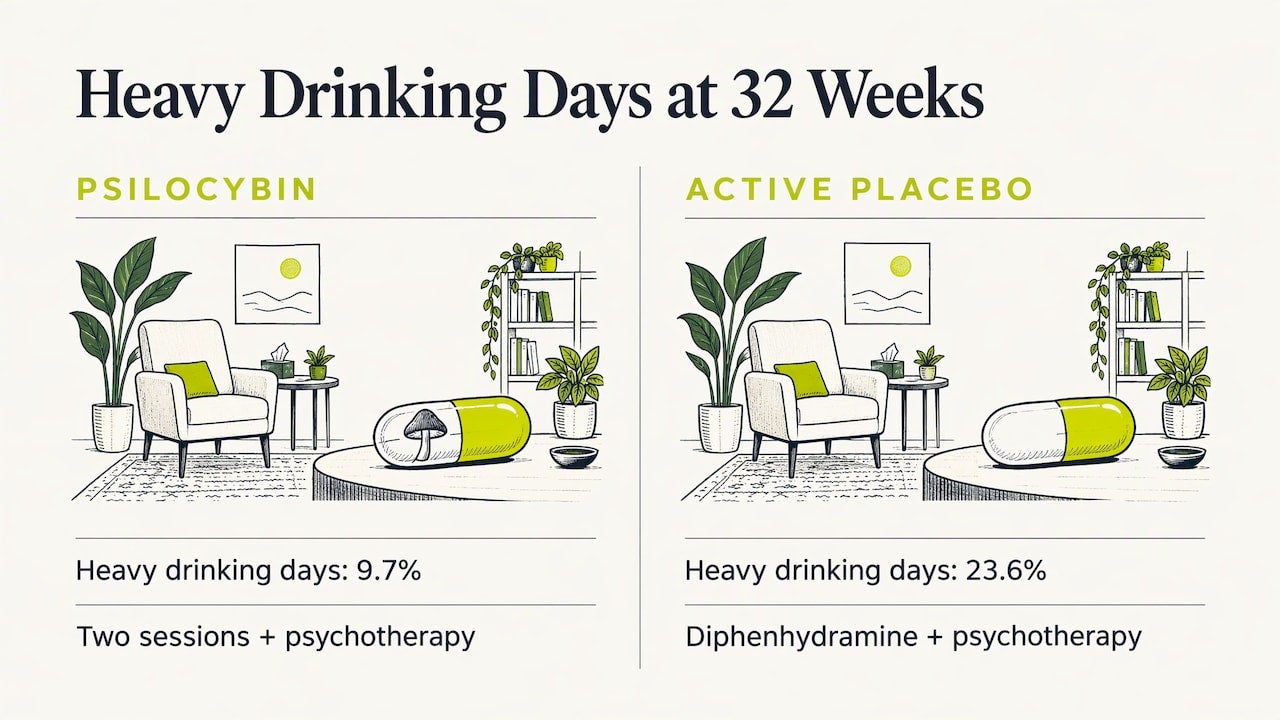
The best-known trial gave 95 adults with alcohol use disorder two psilocybin sessions plus psychotherapy, and compared them with a group that got an active placebo (diphenhydramine, an antihistamine) plus psychotherapy. At 32 weeks, the psilocybin group reported heavy drinking on 9.7% of days against 23.6% in the comparison group. The US National Center for Complementary and Integrative Health adds two cautions: most participants correctly guessed which group they were in, and no one knows whether the effects lasted beyond 32 weeks.
A 2026 meta-analysis pooled six trials with 202 people, three of them randomised controlled trials. It found moderate short-term advantages for psilocybin-assisted therapy on drinks per day, percent drinking days and heavy drinking days. Only percent drinking days stayed better at longer follow-up. People in the psilocybin groups had higher odds of staying abstinent, and adverse events were mostly mild and short-lived.
A small pilot of 15 smokers combined psilocybin with cognitive behavioural therapy. Of those, 80% were abstinent at 26 weeks and 67% at 52 weeks. Fifteen people is a very small group, so treat the numbers as a signal for larger trials to test, not as a success rate.
Evidence here is thinner. A nine-year pilot of psilocybin-assisted therapy for cocaine use disorder followed 40 adults for 180 days. A JAMA Network Open commentary notes the trial left out people taking antidepressants or living with current psychiatric disorders, which means the results may not apply to many people who actually have cocaine use disorder. Contingency management, a treatment that gives rewards for drug-free tests, is the current best-supported approach and can be used alongside other care. For opioids, Canada’s BC Centre on Substance Use describes the evidence as emerging.
A 2025 overview of 16 systematic reviews concluded that psychedelics for substance use disorders remain experimental, with preliminary evidence, a high risk of bias and not-negligible risks. Canada’s Centre for Addiction and Mental Health (CAMH) lists some substance use disorders among the areas with promising research results, and also says more studies are needed to know which conditions psychedelic therapy suits. Both things are true: the signal is real, and the proof is not yet complete.
This is the point most readers miss. In the trials, psilocybin is one part of a treatment programme.
| Clinical psilocybin therapy | Microdosing | |
|---|---|---|
| Typical dose | One or two high-dose sessions, for example 25 mg per 70 kg in the alcohol trial | Small, repeated amounts below the level that causes strong perceptual effects |
| Setting | Clinic, with trained therapists before, during and after | Day-to-day life |
| Goal | Treat a diagnosed disorder alongside psychotherapy | Personal wellness goals such as mood, focus or creativity |
| Evidence | Several small trials, still experimental | CAMH says microdosing research has mixed results, so benefits cannot yet be stated |
BCCSU lists commonly used dose ranges: a microdose is about 0.1 to 0.25 g of dried mushrooms, a low dose 0.25 to 1 g, a moderate dose 1 to 3 g and a high dose 3 to 4 g. Effects start within 10 to 60 minutes and last roughly 2 to 6 hours. The trials above used doses in the upper part of that range, with preparation and follow-up sessions around them. That structure is part of what was tested. If you want to understand the difference in more depth, our guide to psilocybin therapy walks through how a clinical session is organised.
CAMH says psychedelics are generally not considered addictive, with ketamine the exception, though psychological dependence is possible. Health Canada notes risks that matter for anyone considering any use:
“Bad trips” with paranoia and a distorted sense of self, which can lead to risky behaviour and injury.
Flashbacks.
Higher risk when combined with cannabis, amphetamines or alcohol.
Higher risk for people with psychiatric conditions.
Short-term rises in blood pressure and heart rate, which could be harmful for people with heart disease.
All of these are on Health Canada’s magic mushrooms page. If you live with a mental health condition, take antidepressants or have a heart condition, speak with your doctor or pharmacist before using any psilocybin product. This matters especially if you are in recovery, because the trials mostly screened such people out or monitored them closely.
Under the Controlled Drugs and Substances Act, psilocybin and psilocin are controlled substances.
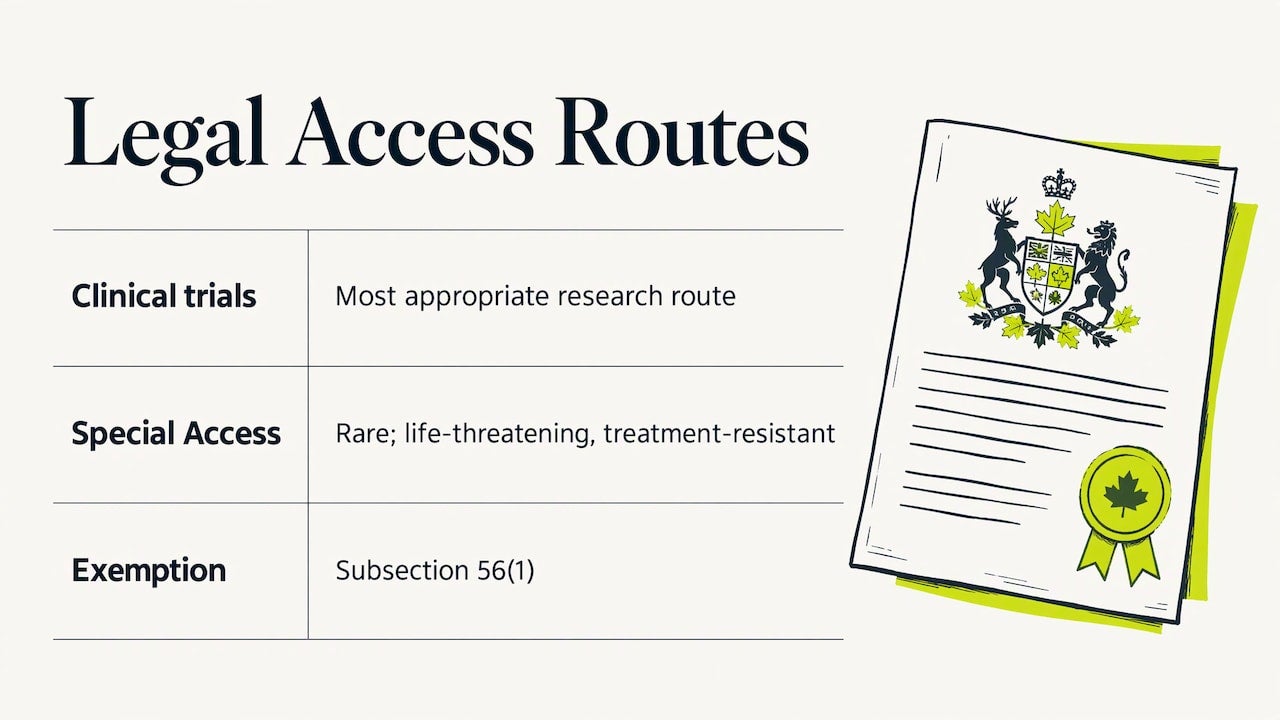
Legal routes to psilocybin for treatment are narrow. Health Canada’s briefing notes list approved clinical trials, the Special Access Program, and a subsection 56(1) exemption. CAMH describes the Special Access route as used in rare cases for patients with life-threatening conditions that have not responded to other treatments. Canada’s new Controlled Substances Regulations came into force on 1 October 2026, consolidating several federal regulations and exemptions into one framework. Pathways can change, so check Health Canada’s page or ask your physician for the current rules. For background on how lawmakers have approached the topic, see our pieces on Thomas’ Bill and lawmakers and mental health.
Psilocybin is not an approved treatment for addiction, and a trial result is not a plan for your own recovery. Proven options exist today. Health Canada’s get help with substance use page lists services by province and territory, including:
British Columbia: Alcohol & Drug Information Referral Service, 1-800-663-1441 (24 hours), and HealthLink BC at 8-1-1.
Alberta: Addiction Helpline, 1-866-332-2322 (24/7).
Manitoba: Addictions Helpline, 1-855-662-6605 (call or text).
Ontario: ConnexOntario, 1-866-531-2600, or text CONNEX to 247247.
Newfoundland and Labrador: 811 HealthLine, and the Opioid Dependence Treatment line at 1-844-752-3588.
If you want to ask about clinical trials, tell your family doctor or an addiction medicine physician. They can also tell you whether any trial near you is recruiting, and they will be able to check how psilocybin would interact with your medications.
Many readers arrive at this topic with a different goal: steadier mood, clearer thinking, more creative energy, or a different relationship with drinking. That is a separate question from treating a disorder. We cover it in why some people are replacing alcohol with magic mushrooms. Whatever your goal, start with accurate information and a clear picture of the legal position in Canada.
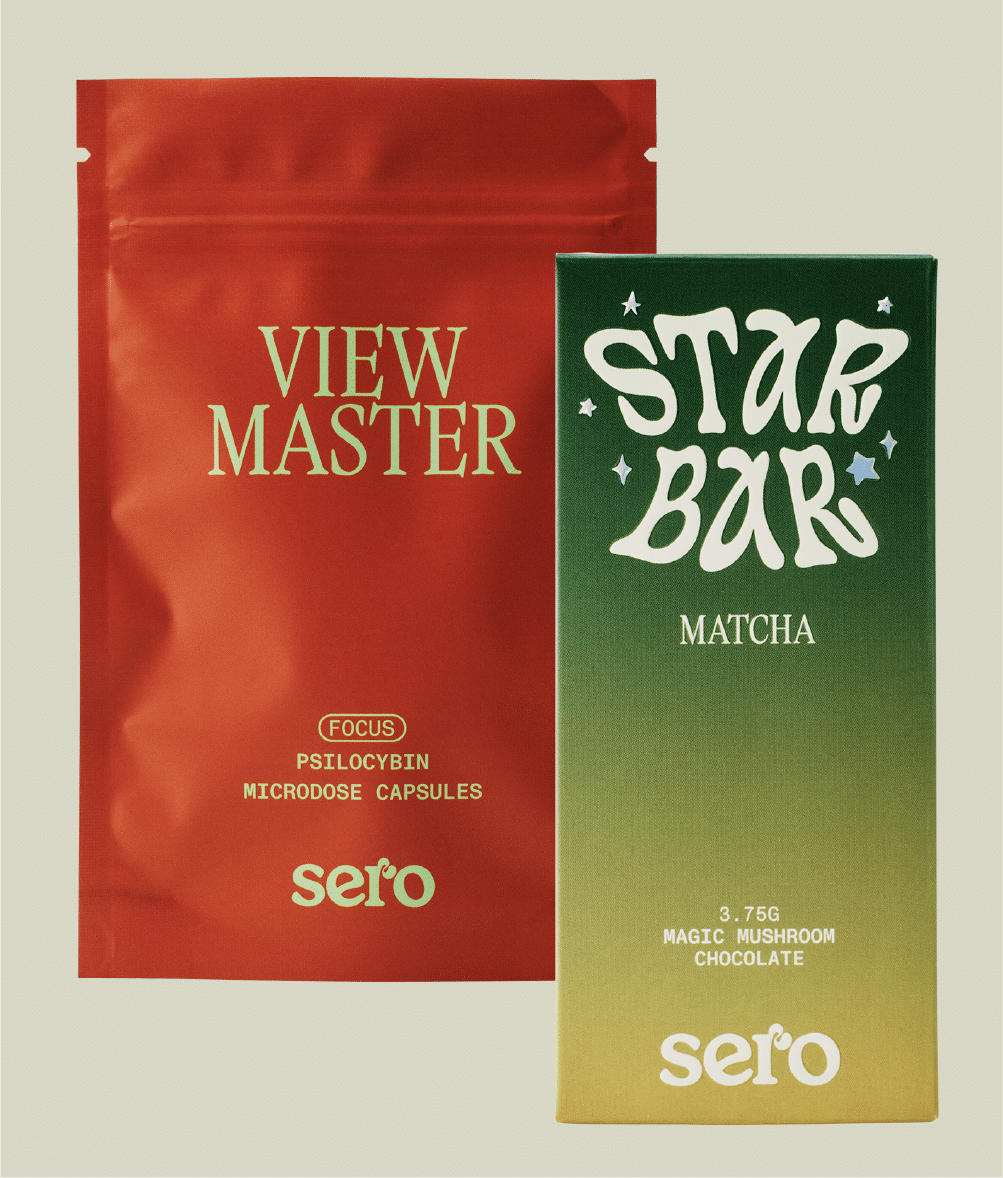
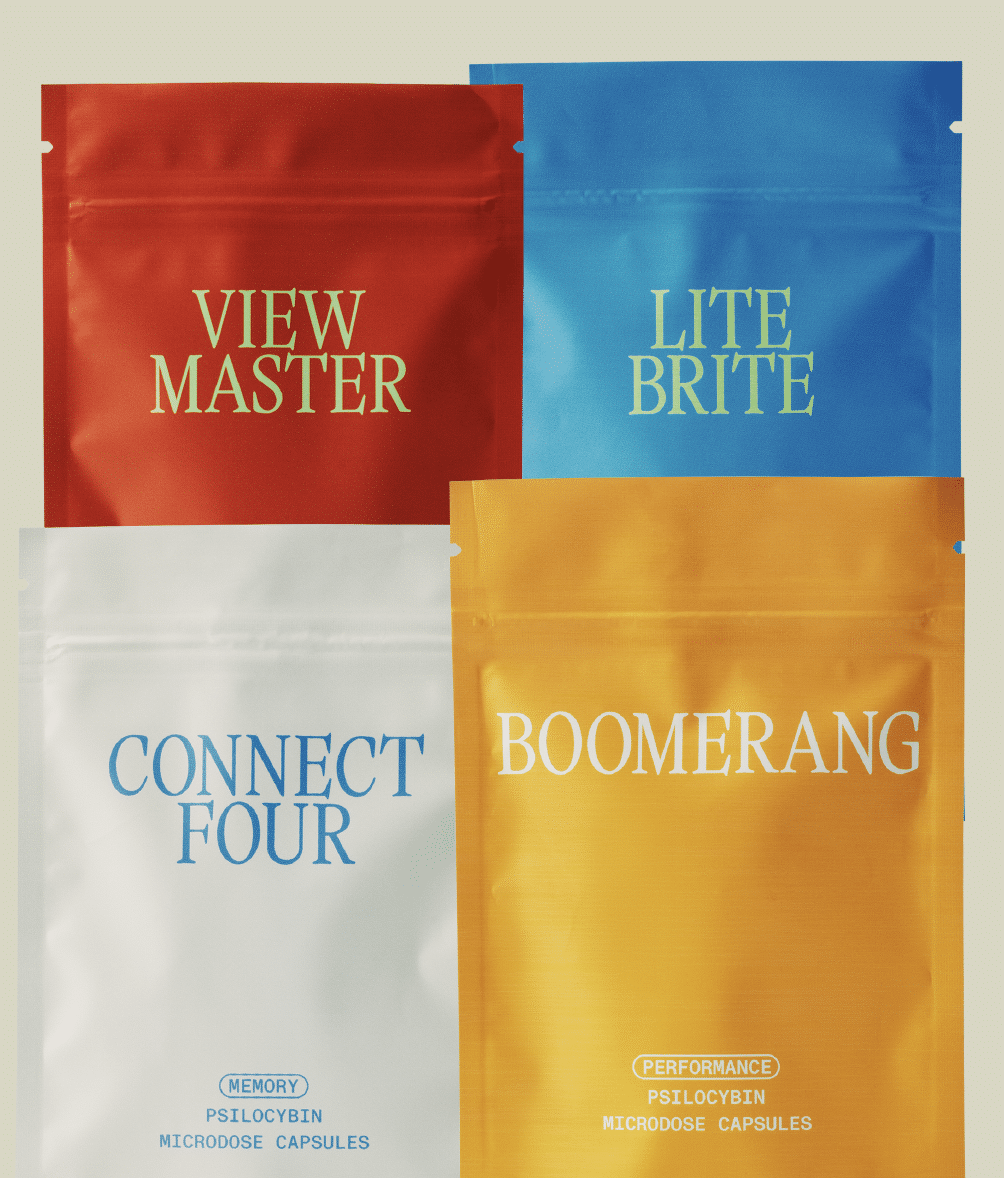
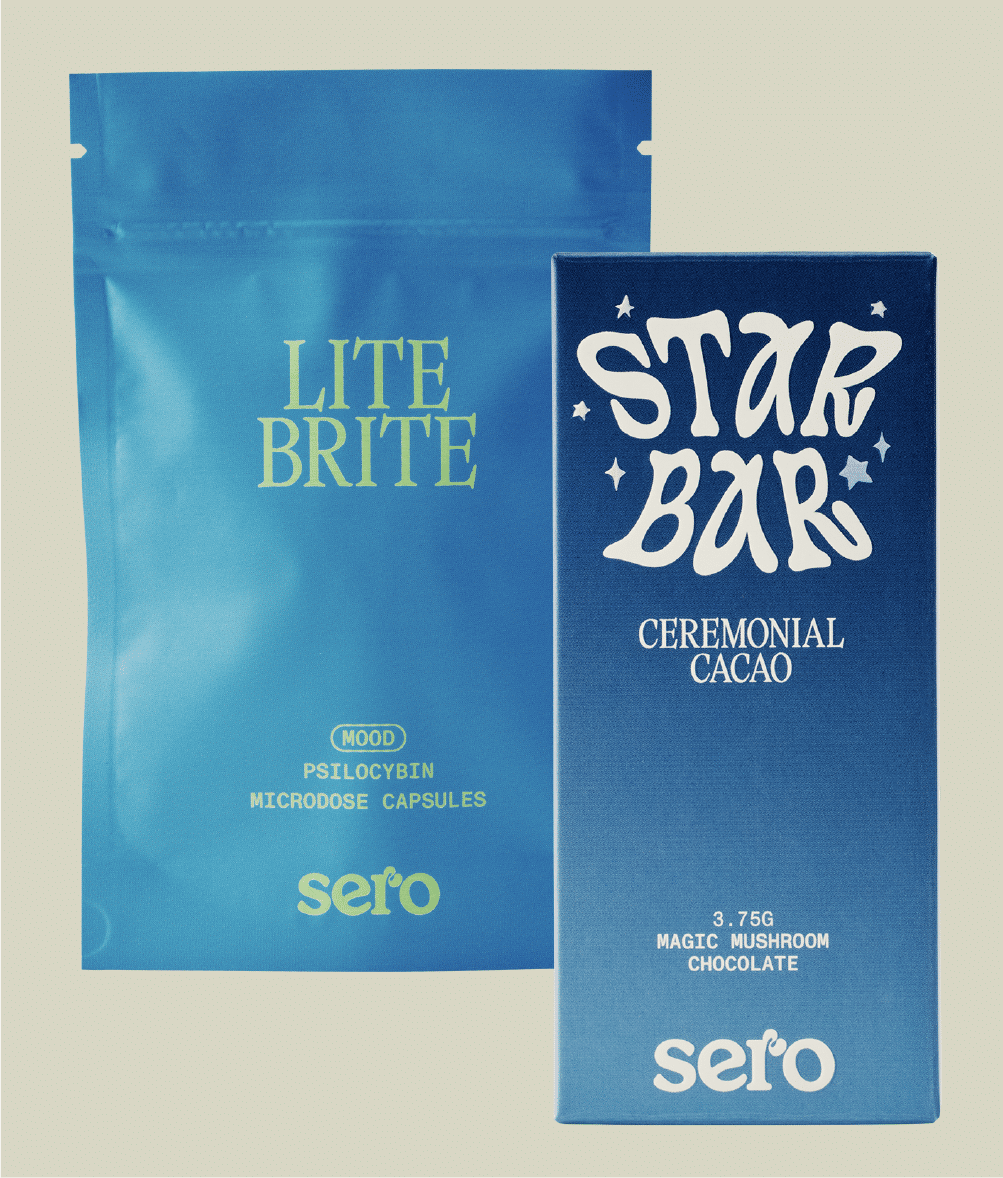
For adults who choose to explore psilocybin for mood, focus and emotional balance, Sero offers microdosing capsules, magic mushroom chocolate and magic mushroom tea. Our products are sustainably harvested and paired with educational guides for responsible use, and over 5000 customer reviews describe their experience with them. Sero products are not a treatment for addiction or any medical condition, and they are not a replacement for care from a health professional.
If you are new to this, read Microdosing 101 first. It covers what a microdose is and how people structure their days around it.
Headlines about psychedelics curing addiction skip several details. Four questions help you make sense of any study you read.
How many people took part? Fifteen people and 95 people are both small compared with the thousands in typical drug trials.
Was there a control group? Without one, improvement could come from the therapy, from time or from expectations. In the alcohol trial, most participants guessed their group, which makes it harder to separate the drug effect from expectation.
How long was follow-up? Most trials track people for 6 to 12 months. Addiction is often a long-term condition, so lasting effects remain unknown.
Who was excluded? Many trials left out people with other psychiatric conditions or on antidepressants, a gap highlighted in the JAMA Network Open commentary. People in recovery often live with those conditions.
A Canadian health technology review reached a similar view, noting small samples, short follow-up and unclear applicability to Canadian settings when it reviewed psilocybin trials for alcohol and nicotine dependence.
Supervision is part of the safety picture. CAMH points out that people in psychedelic therapy can be in a vulnerable state, and documented cases of therapist abuse show why oversight is needed. Short-term effects can include distress, fear, anxiety and paranoia, and CAMH says realistic quantities are not known to cause fatal overdose on their own. In practice that means preparation, a calm setting, a sober companion or clinician, and no mixing with alcohol or other drugs. Those conditions are central to how the trials were run.
No. Early trials show reductions in drinking and higher smoking abstinence when psilocybin is combined with psychotherapy, but researchers call the evidence preliminary. Health Canada states that no psilocybin products are approved for therapeutic use. Talk with your health care provider about treatments with established evidence.
In a 2022 trial, adults with alcohol use disorder who received psilocybin with therapy had fewer heavy drinking days at 32 weeks than a comparison group. That was a supervised clinical programme, not self-directed use. A 2026 meta-analysis found the advantage mostly faded at longer follow-up, apart from percent drinking days.
CAMH says psychedelics are generally not considered addictive, though psychological dependence is possible. Short-term effects can be distressing for some people, and Health Canada warns of higher risks with alcohol, cannabis or amphetamines, and for people with psychiatric or heart conditions.
Call your provincial helpline, such as ConnexOntario at 1-866-531-2600 or the Alberta Addiction Helpline at 1-866-332-2322, or call 8-1-1 in BC. Your family doctor can also refer you to treatment and tell you about clinical trials.
BC Centre on Substance Use: Psilocybin, Psychedelics At a Glance
The Role of Psychedelics in the Treatment of Substance Use Disorders (PMC, 2025)
Efficacy and safety of psilocybin-assisted therapy for alcohol use disorder (PMC, 2026)
Efficacy and safety of psilocybin for the treatment of substance use disorders (PubMed)
Pilot Results for Psilocybin-Assisted Psychotherapy for Cocaine Use Disorder (JAMA Network Open)
Canadian Journal of Health Technologies: Psychedelic-assisted psychotherapy review
Ontario College of Pharmacists: Controlled Substances Regulations
This article is for educational and informational purposes only and does not constitute medical advice. Always consult a qualified healthcare professional before considering microdosing, particularly if you have an existing medical condition or take medication.